Wedding Ceremony Programs and Guest Cues
A wedding ceremony program should help guests recognize each stage of the ceremony and understand what they are expected to do. For a Mexican or Mexican-American wedding, that may involve bilingual wording, family processions, Catholic responses, Las Arras, El Lazo, and clear cues for standing, sitting, responding, or moving.
The program is not a complete script or a general account of Mexican wedding customs. It should describe the ceremony that this couple, family, parish, and venue have planned.
More specific pages
These pages continue the topic in smaller, more specific directions.
What a Wedding Ceremony Program Should Clarify
Begin with the guest experience. Someone unfamiliar with the family's practices should still be able to follow the ceremony without reading a long explanation.
A useful program answers four questions:
- What is happening at this point in the ceremony?
- Who is participating?
- What should guests do?
- Is the moment a liturgical element, family practice, couple's choice, or venue instruction?
Those categories should not be blended. Las Arras may be important to one family without appearing in another family's wedding. A posture or response requested by one parish may not match the sequence used elsewhere.
If the ceremony and reception are in different locations, include only the transition details guests need. Check the destination, departure time, transportation plan, and arrival instructions with the venue or coordinator before printing.
A Practical Program Structure
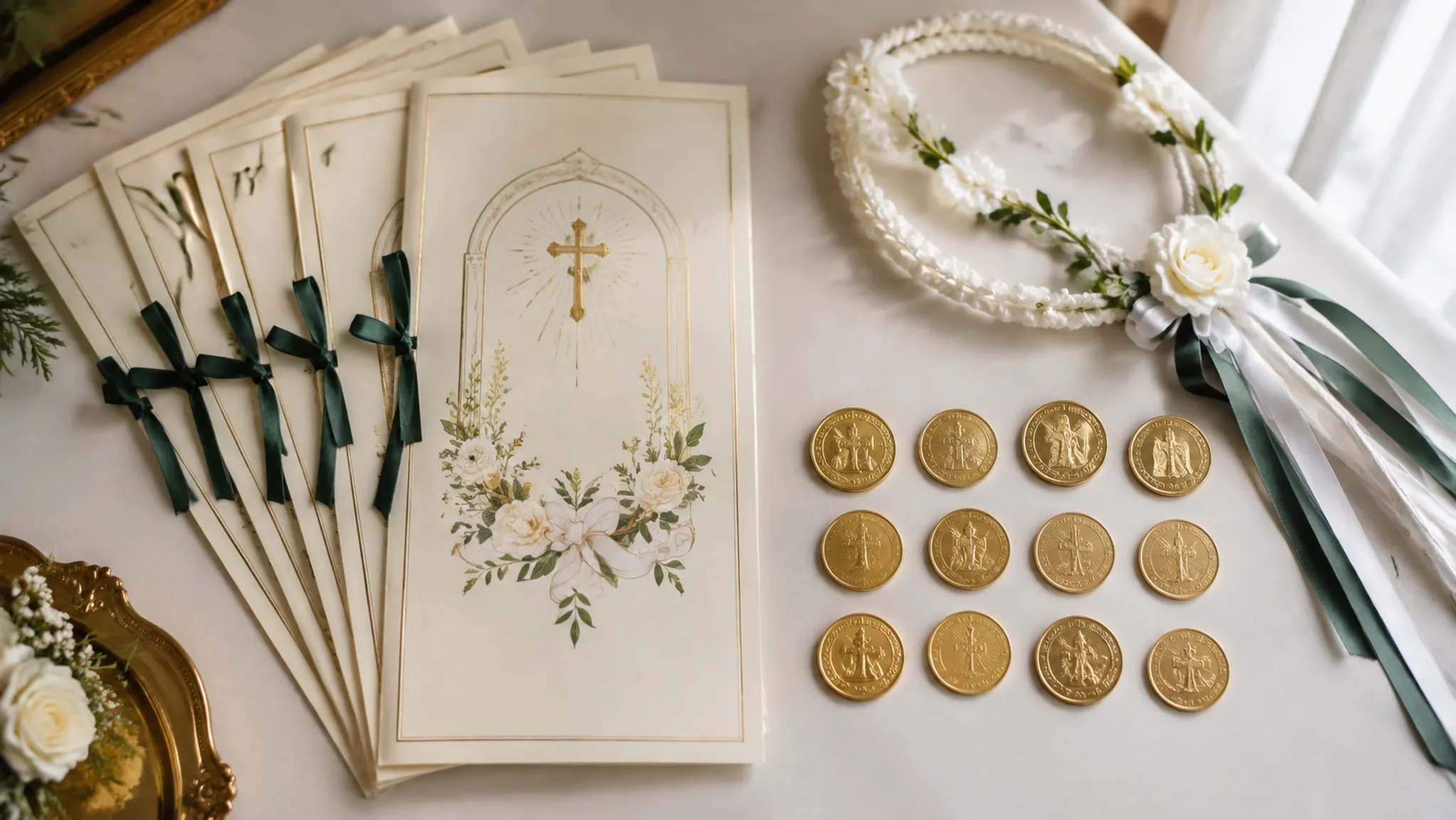
The program may be a folded card, single sheet, booklet, or digital document. Format is a design choice, not a measure of cultural accuracy.
- Couple's names, ceremony date, and location
- Welcome or opening note
- Main ceremony sequence
- Selected cultural or family moments
- Names and functions of participants
- Guest response and movement cues
- Language information
- Reception transition details, when needed
Keep explanations short enough to scan during the ceremony. Guests need orientation more than a detailed history of each practice.
Las Arras: The couple will take part in a coin ceremony with designated family members. Guests may remain seated.
This example identifies the action and guest cue without assigning one universal interpretation, sequence, or participant list.
Wedding Program Wording for Las Arras and El Lazo
Some Mexican and Mexican-American couples include Las Arras, El Lazo, or both. Their placement, participants, terminology, and family interpretation can differ, so program wording should remain specific to the planned ceremony.
Available public reference material does not support one standard Mexican or Mexican diaspora script for these moments. Treat the examples below as adaptable wording, then review the final language with the couple, participating relatives, and parish when applicable.
Las Arras Program Wording
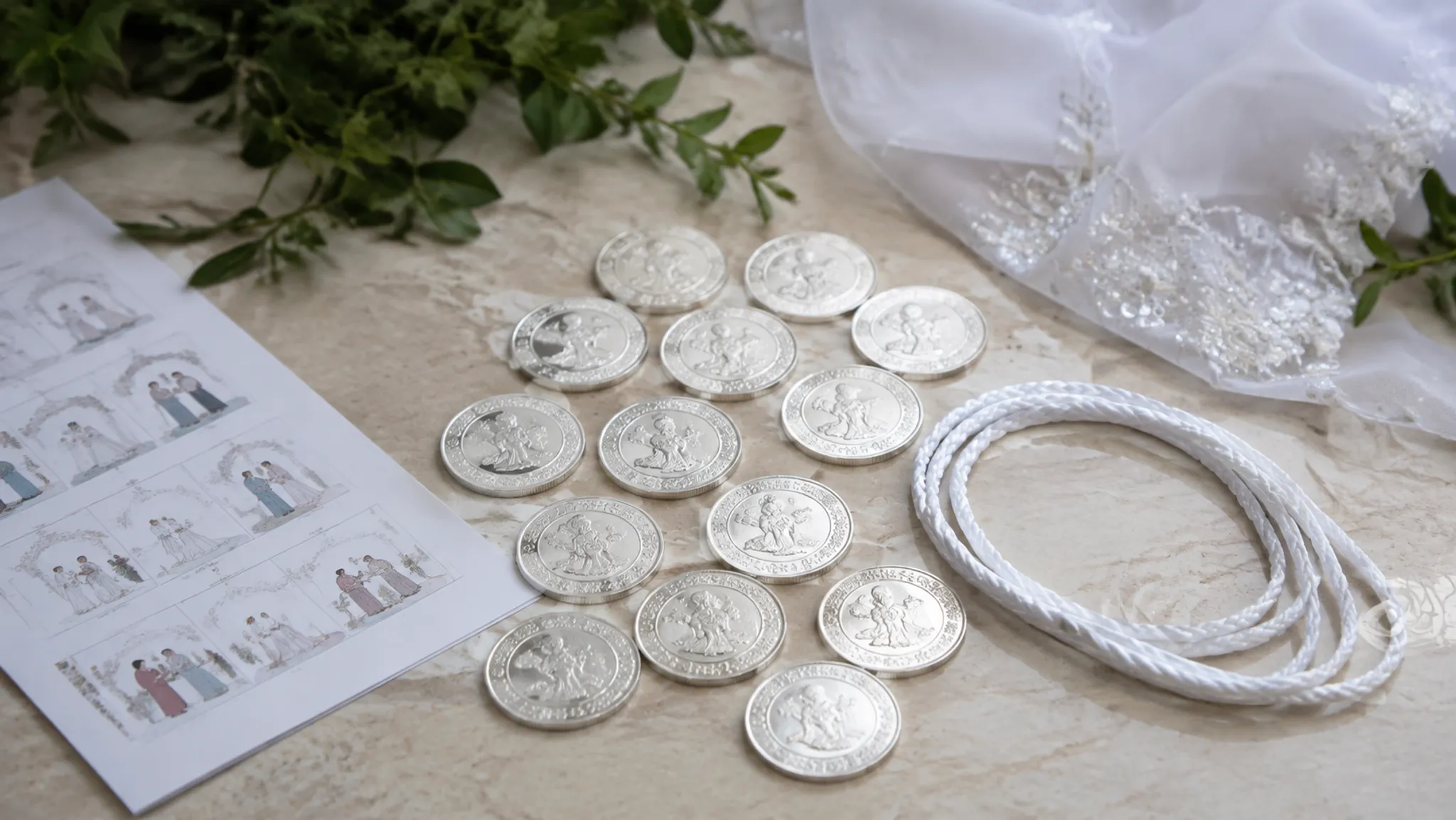
A concise description can name the action without making a broad cultural claim:
Las Arras: Wedding coins will be presented during a ceremony moment selected by the couple and family.
If the family wants to explain its own interpretation, identify it as such:
Las Arras: Our family includes this coin ceremony as a gesture of shared responsibility and support.
The phrase “our family includes” places the meaning in the couple's context. It does not imply that every family uses the same explanation.
Before finalizing the entry, settle who will carry the coins, who will present them, where they will wait, and when they will come forward. The parish should verify where the moment fits within a Catholic ceremony.
El Lazo Program Wording
El Lazo can be introduced with the same restraint:
El Lazo: Designated family members will place the lazo around the couple during this selected ceremony moment.
If the participants are known, names are often more useful than a broad family title:
El Lazo: [Names] will assist the couple with the lazo. Guests may remain seated.
A personal interpretation can be included when it reflects the couple's intended message:
El Lazo: Our families include the lazo as a sign of their support for our marriage.
Do not assume a fixed meaning, participant type, or position in the ceremony. Separate the family's preferred explanation from the sequence set with the officiant or parish.
Assumptions to Remove Before Printing
- That every Mexican or Mexican-American wedding includes both moments
- That Las Arras and El Lazo always appear in the same order
- That relatives with similar titles perform identical tasks
- That a parish will use wording taken from another program
- That guests should stand or move during either moment
- That one family's program can be reused without reviewing the sequence
How to Write Wedding Ceremony Guest Cues
Guest cues should appear next to the moment they govern. Each cue should make clear whether it applies to everyone, selected relatives, or the wedding party.
| Ceremony moment | Adaptable guest cue |
|---|---|
| Processional | Please stand as the wedding party enters. |
| Reading | Please be seated for the reading. |
| Congregational response | The congregation is invited to join in the printed response. |
| Family participation | Designated family members will come forward. Guests may remain seated. |
| Recessional | Please remain in place until the wedding party has exited. |
| Reception transition | Guests may proceed to the reception venue after the recessional. |
Use direct language for guest actions and descriptive language for participant actions. “Please stand” instructs the guests. “The family will come forward” explains what other people will do.
Standing, Sitting, and Response Cues
A Catholic wedding may include several changes in posture, but the pattern depends on the ceremony form and local parish practice. Do not build these cues from a generic wedding order.
Ask the parish or officiant where guests will stand, sit, kneel, listen, or respond. The final program can then use short instructions such as:
Entrance: Please stand.
Opening prayer: Please stand as directed by the celebrant.
Reading: Please be seated.
Congregational text requires particular care. Do not rewrite a liturgical response from memory or treat the wedding program as a substitute for the text supplied by the parish.
Build the Program from the Confirmed Ceremony Order
The sequence may change depending on whether the couple is planning a Catholic wedding within Mass, a Catholic ceremony without Mass, a civil ceremony, or separate religious and civil events. Family practices may be included in one setting and omitted in another.
| Ceremony moment | What guests need | People or objects involved | Who settles the detail |
|---|---|---|---|
| Entrance | Whether to stand | Wedding party, relatives, officiant | Parish or officiant |
| Reading | Language and posture | Reader and text | Parish or officiant |
| Las Arras | Brief explanation and action cue | Couple, coins, designated participants | Couple, family, and parish |
| El Lazo | Whether to remain seated | Couple, lazo, designated participants | Couple, family, and parish |
| Vows or consent | Whether to listen or respond | Couple and officiant | Parish or officiant |
| Closing and exit | When guests may move | Couple and wedding party | Ceremony team and venue |
| Reception transition | Destination and transportation instructions | Guests, transportation, venue | Venue or coordinator |
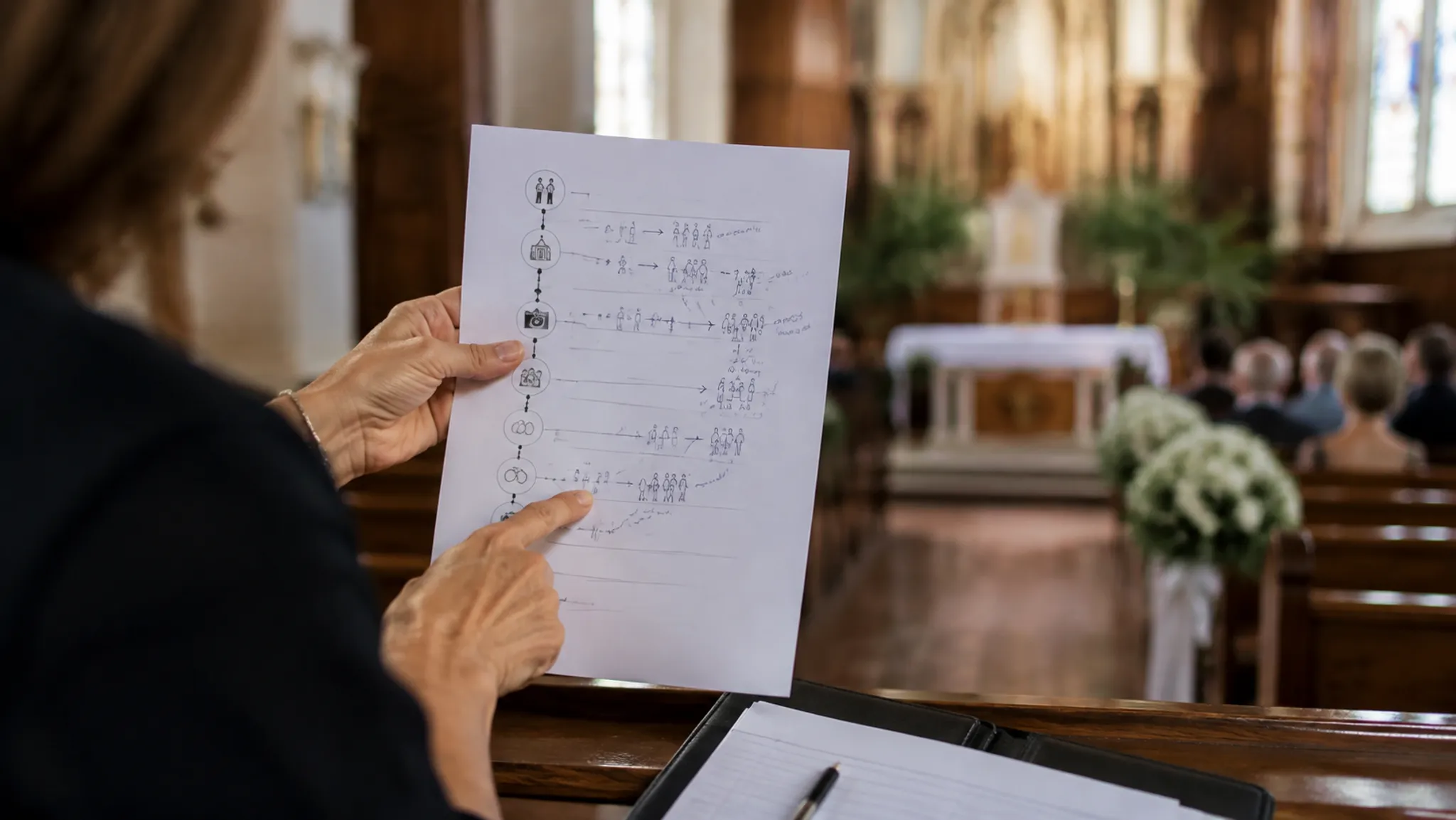
This planning table separates the event from the information guests require. It also exposes missing names, objects, cues, and decisions before the program reaches the printer.
Ceremony Timing Without False Precision
A sequence is usually more dependable than a minute-by-minute schedule. Delays in seating, music, processions, photography, or transportation can quickly make printed estimates inaccurate.
- Guest seating
- Processional
- Opening
- Readings or prayers
- Marriage ceremony
- Selected family moments
- Closing
- Recessional
- Reception transition
Keep civil registry timing separate unless the responsible authority has provided details that belong in the guest program. A church ceremony and civil appointment may involve different locations, documents, people, and scheduling procedures.
Wedding Ceremony Family Roles
List family roles only after the couple has assigned the task and the relevant ceremony contact has accepted the arrangement. A title used in one family may carry a different responsibility in another.
Possible categories include readers, musicians, processional participants, sponsors, people presenting Las Arras, people assisting with El Lazo, and guest guides. Do not assign duties from a generic description of padrinos or madrinas.
Specific entries are clearer:
Las Arras: [Name] will present the coins.
El Lazo: [Names] will assist with the lazo.
Reading: [Name] will read in Spanish.
Each participant should know what to carry, where to wait, who will signal them, and where to return afterward. Detailed movement instructions belong on a separate coordinator's sheet rather than in the guest program.
Creating a Bilingual Wedding Ceremony Program
A bilingual wedding ceremony program should be organized around comprehension, not equal word counts. Spanish and English may be used for headings, explanations, readings, responses, and movement cues in different combinations.
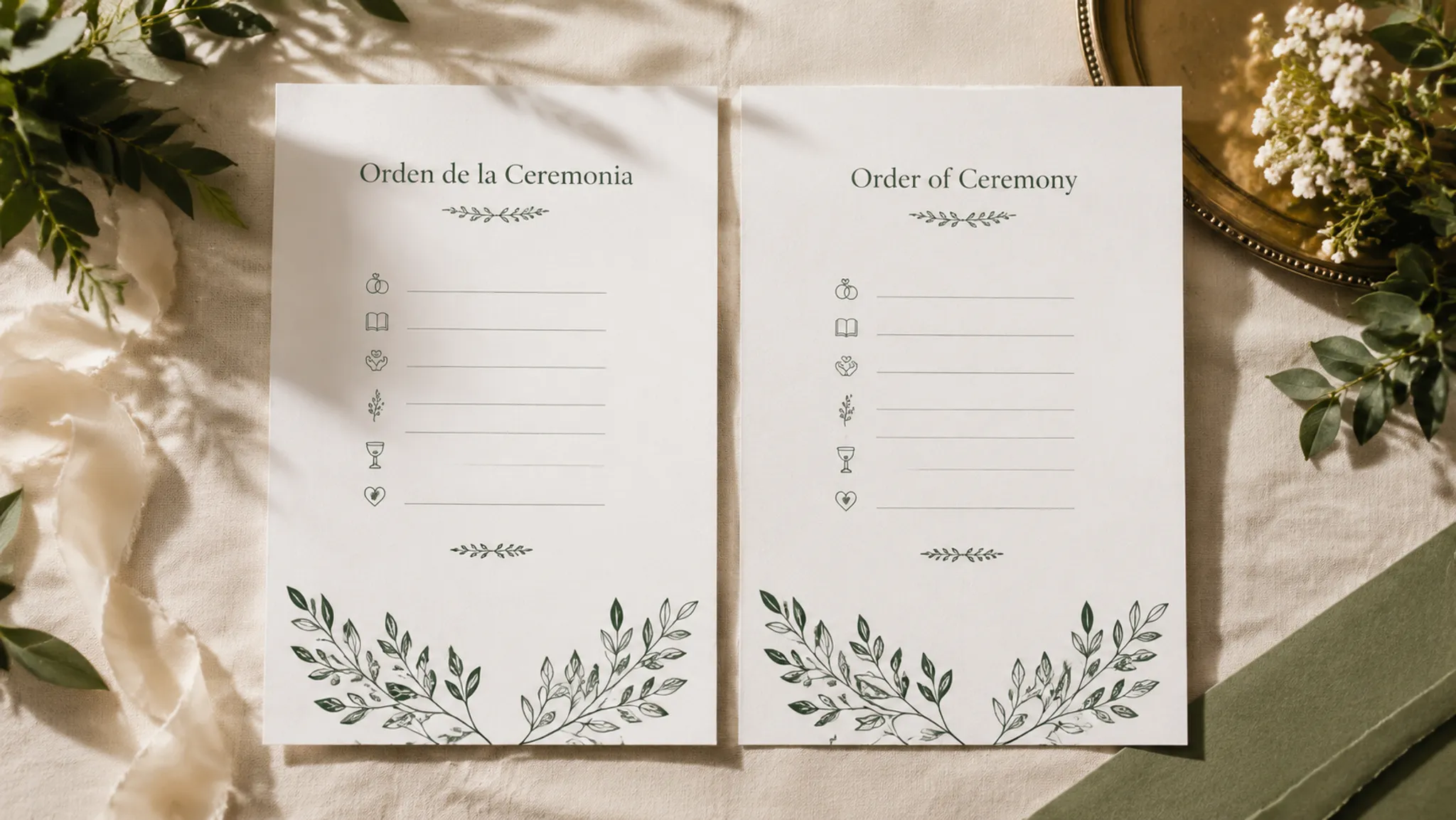
| Program element | Planning decision |
|---|---|
| Names and locations | Keep consistent across both language sections. |
| Ceremony headings | Use both languages when this improves navigation. |
| Cultural explanations | Translate the intended family meaning, not only the individual words. |
| Movement cues | Make essential instructions easy to find for both language groups. |
| Readings and responses | Use the language plan and text settled with the parish or officiant. |
| Reception directions | Choose one or both languages according to guest needs. |
Research on Spanish-English Catholic services shows that formal religious language and everyday community language can be distributed deliberately within the same service. For program planning, the useful lesson is narrower: decide which guests need each section and how they will recognize participation cues.
Ask which language will be used for readings, congregational responses, family explanations, and spoken instructions. Do not imply that the ceremony will alternate languages in a fixed pattern unless that sequence has been arranged.
Las Arras: The couple will take part in a selected coin ceremony with designated family members.
El Lazo: Designated family members will assist the couple during this ceremony moment.
Names such as Las Arras and El Lazo may remain the same in parallel sections, while the explanation changes language. Ask the couple and participating relatives which terms they use, then review religious participation language with the parish.
Common Mix-Ups to Resolve
Custom Versus Institution-Specific Procedure
A family practice may matter deeply to the couple without being part of the parish's ceremony structure. A parish instruction can govern participation without defining the family's interpretation.
Signal the difference through attribution: “Our family includes,” “The couple has chosen,” “The parish has requested,” or “The venue asks guests to.” Each phrase identifies a different decision-maker.
Religious Ceremony Versus Civil Administration
A religious ceremony, civil appointment, and reception may share one schedule while remaining separate planning contexts. Information about registration, documents, or appointments depends on the jurisdiction and responsible office.
The guest program should contain only confirmed logistical information. It should not attempt to provide the couple with a universal document list or imply that one event completes another administrative process.
Family Expectation Versus Assigned Task
A relative may expect to participate because of family precedent, while the couple or parish has planned a different sequence. Resolve that discussion before names appear in print.
Settle who participates, what each person does, where they enter and exit, which language they use, and whether the role is visible to guests.
Program Explanation Versus Ceremony Script
The program should orient guests, not reproduce every word spoken by the officiant, readers, musicians, or couple. Include full text only where guests need it to respond or follow along.
A Five-Pass Program Review
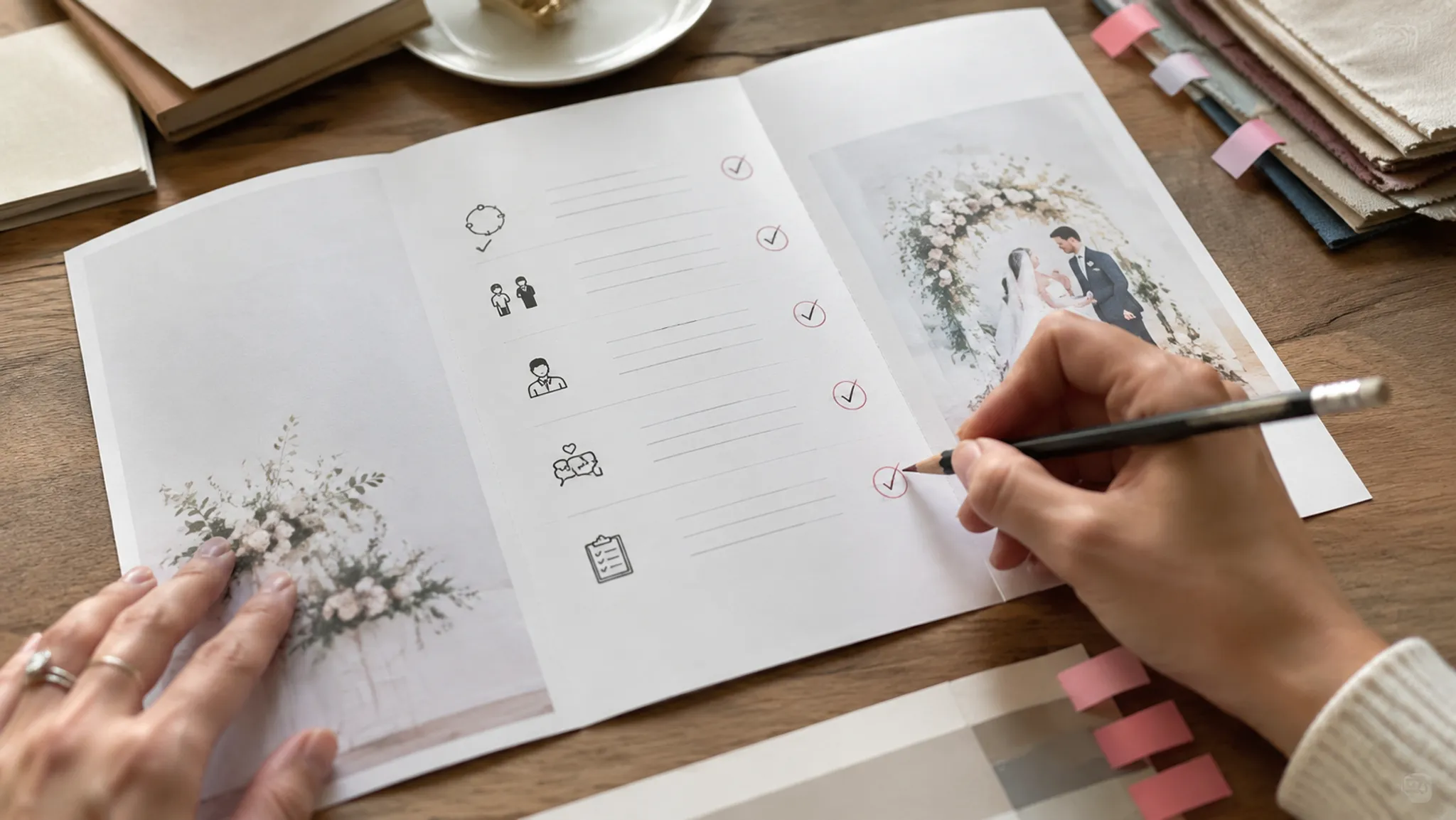
- Sequence: Compare every heading with the ceremony order supplied by the officiant or parish. Check the placement of readings, Las Arras, El Lazo, and family processions.
- Roles: Verify participant names, spelling, task, language, and timing. Remove anyone whose involvement is still being discussed.
- Guest actions: Mark each place where guests stand, sit, respond, remain in place, or move. Review those cues with the person directing the ceremony.
- Language: Compare the Spanish and English sections for consistent names, headings, and instructions. Use supplied liturgical wording rather than translating it from memory.
- Logistics: Recheck locations, arrival instructions, transportation, reception timing, and venue directions. Remove unresolved details.
Finish with a family review of the cultural descriptions. The final wording should reflect what this couple intends, while leaving room for other families and parishes to organize these moments differently.
Questions to Settle Before Printing
With the Parish or Officiant
- Which ceremony sequence will be used?
- When should guests stand, sit, remain quiet, or respond?
- Which readings, prayers, music, and bilingual elements will be included?
- Can Las Arras or El Lazo be placed in the planned ceremony?
- Where will each selected family moment occur?
- Who will direct participants when it is time to move?
- Which participation text should appear in the program?
With the Couple and Family
- Which cultural moments belong in this ceremony?
- What interpretation does the family want to share?
- Who will carry, present, read, or assist?
- Which family titles need a specific task beside them?
- Which guests need Spanish, English, or both?
- Are any private family roles better omitted from the program?
With the Venue or Coordinator
- When may guests enter and where should they wait?
- Are there seating or movement restrictions?
- When may guests leave for the reception?
- Which transportation or arrival details belong in print?
With the Civil Authority, When Relevant
- Which details apply to the couple's civil appointment?
- Which location and scheduling information must the couple verify?
- Does any confirmed information need to be communicated to guests?
A strong wedding ceremony program is specific without becoming crowded. It names the actual sequence, identifies participants, gives guests only the cues they need, and separates family preference from parish, venue, and civil decisions. Complete those confirmations before sending the program to print.
Sources
- Support for Engaged Couples in Preparation for a Catholic Marriage
- The Ordo Celebrandi Matrimonium 1991 as a Case Study of the Creative Exchange between Liturgical Traditions and Theological Developments
- Language alternation and choice in a formal register: Spanish and English in bilingual Catholic services