Wedding Program Wording for Las Arras and El Lazo
For clear arras and lazo wedding program wording, name each ceremony moment in plain language, identify the people involved, and avoid treating one sequence as universal.
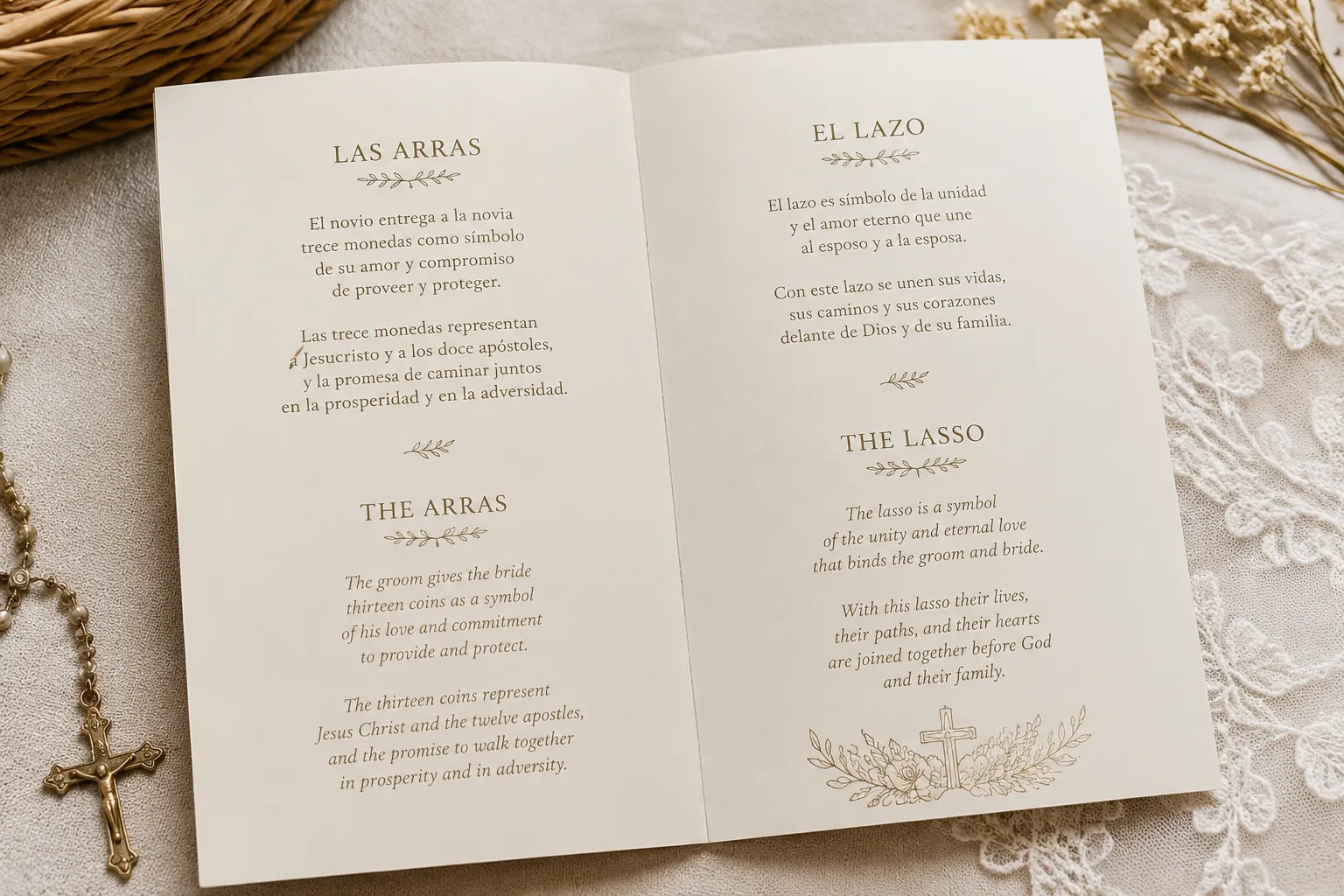
A flexible combined entry could read:
Las Arras and El Lazo
During the ceremony, [Couple’s Names] will participate in the presentation of the arras and the placing of el lazo. We are grateful to [Participant Names] for joining us in these family traditions.
This wording leaves room for differences in terminology, language, sponsor roles, and ceremony order. Confirm those details with the couple, family members, and parish before printing.
Wedding Program Wording for Las Arras
Las Arras program wording can stay brief, especially in a one-page program. Use the familiar Spanish term, add an English explanation when useful, and name participants only after their roles are settled.
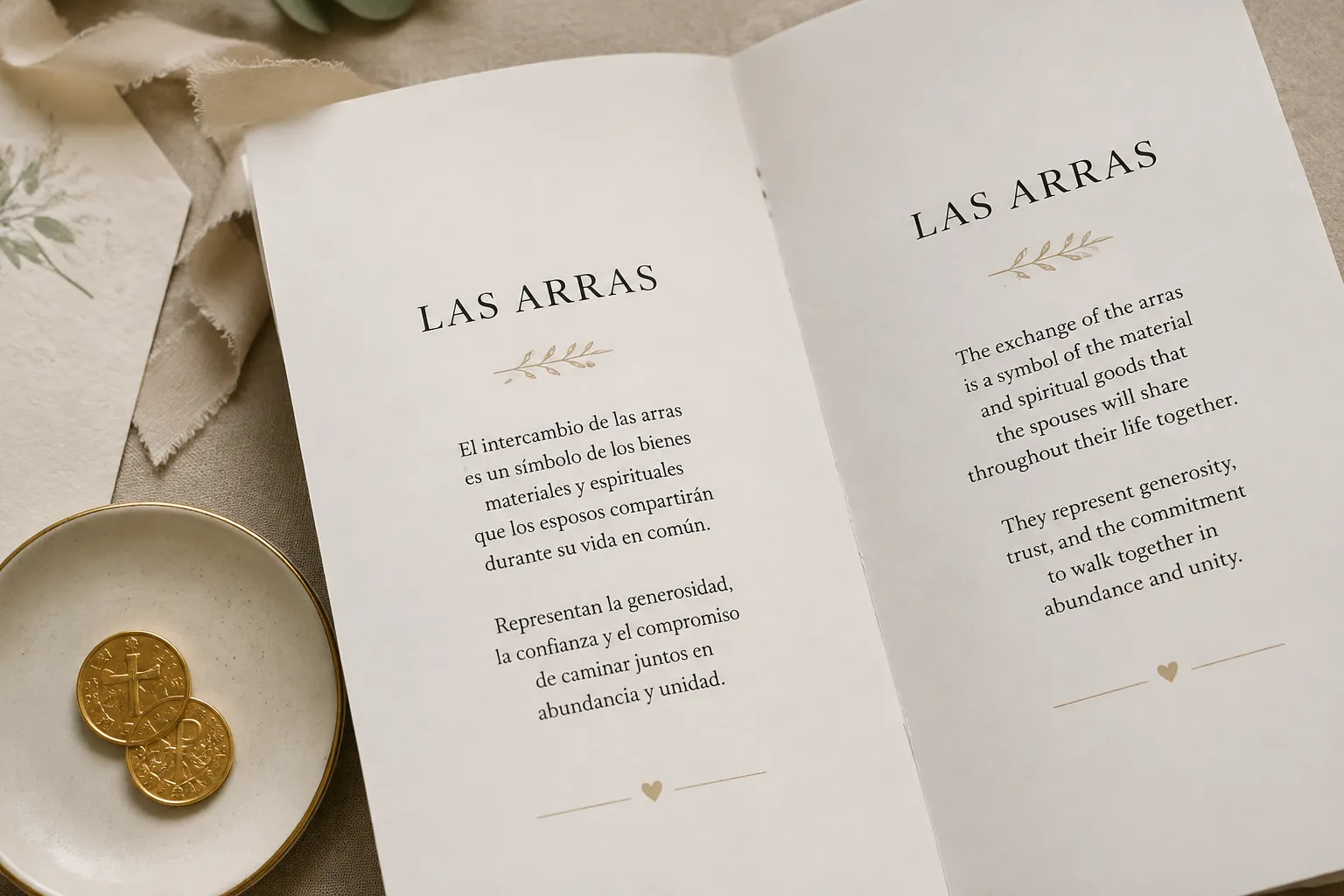
Short wording
Las Arras
The presentation of the arras, a symbolic exchange included in our ceremony, will be shared by [Participant Names].
More personal wording
Las Arras
With the support of [Participant Names], [Couple’s Names] will participate in the presentation of the arras during their wedding ceremony.
Bilingual wording
Las Arras
A presentation of the arras during the wedding ceremony.
Las arras: Presentación de las arras durante la ceremonia nupcial.
Use bilingual wording when guests may understand one language more easily than the other. Ask the couple or family whether they prefer “arras,” “wedding coins,” “arras tradition,” or another explanation. The parish may also use a preferred term.
Keep the description modest unless the couple has agreed on a particular interpretation. A short explanation is less likely to conflict with the family’s understanding than a detailed statement about what the arras represents.
Wedding Program Wording for El Lazo
El Lazo program wording should tell guests what to expect without promising a fixed placement or sequence. Depending on the couple’s language preference, the program might use el lazo, “wedding lasso,” “wedding cord,” or another natural description.
Short wording
El Lazo
The placing of el lazo will take place during the wedding ceremony, with the participation of [Participant Names].
Explanation for guests
El Lazo
A wedding ceremony tradition represented by the placing of a lazo around the couple. [Participant Names] will participate in this part of the service.
Family-focused wording
El Lazo
We thank [Participant Names] for participating in the placing of el lazo during our ceremony.
“Placing of el lazo” is often a useful neutral phrase when the couple has not finalized how to describe who carries, arranges, or presents it. Those details can vary by family, parish, and ceremony plan.
Las Arras and El Lazo Wording Together
When both customs appear in the same program, keep the entries parallel. This helps guests scan the ceremony without suggesting that the printed wording overrides the parish’s order of service.
Las Arras and El Lazo
As part of the ceremony, [Participant Names] will participate in the presentation of the arras, and [Participant Names] will participate in the placing of el lazo. We are grateful for their support.
For a shorter program, use:
Las Arras and El Lazo
Presentation of the arras and placing of el lazo, with the participation of [Participant Names].
If the same people participate in both moments, say so directly:
Las Arras and El Lazo
[Participant Names] will join us for the presentation of the arras and the placing of el lazo.
Do not add titles such as “padrinos” or “madrinas” unless the couple and family use those titles. Someone may be a sponsor, family member, presenter, or participant without that role name applying in every community.
How Much Detail Should the Program Include?
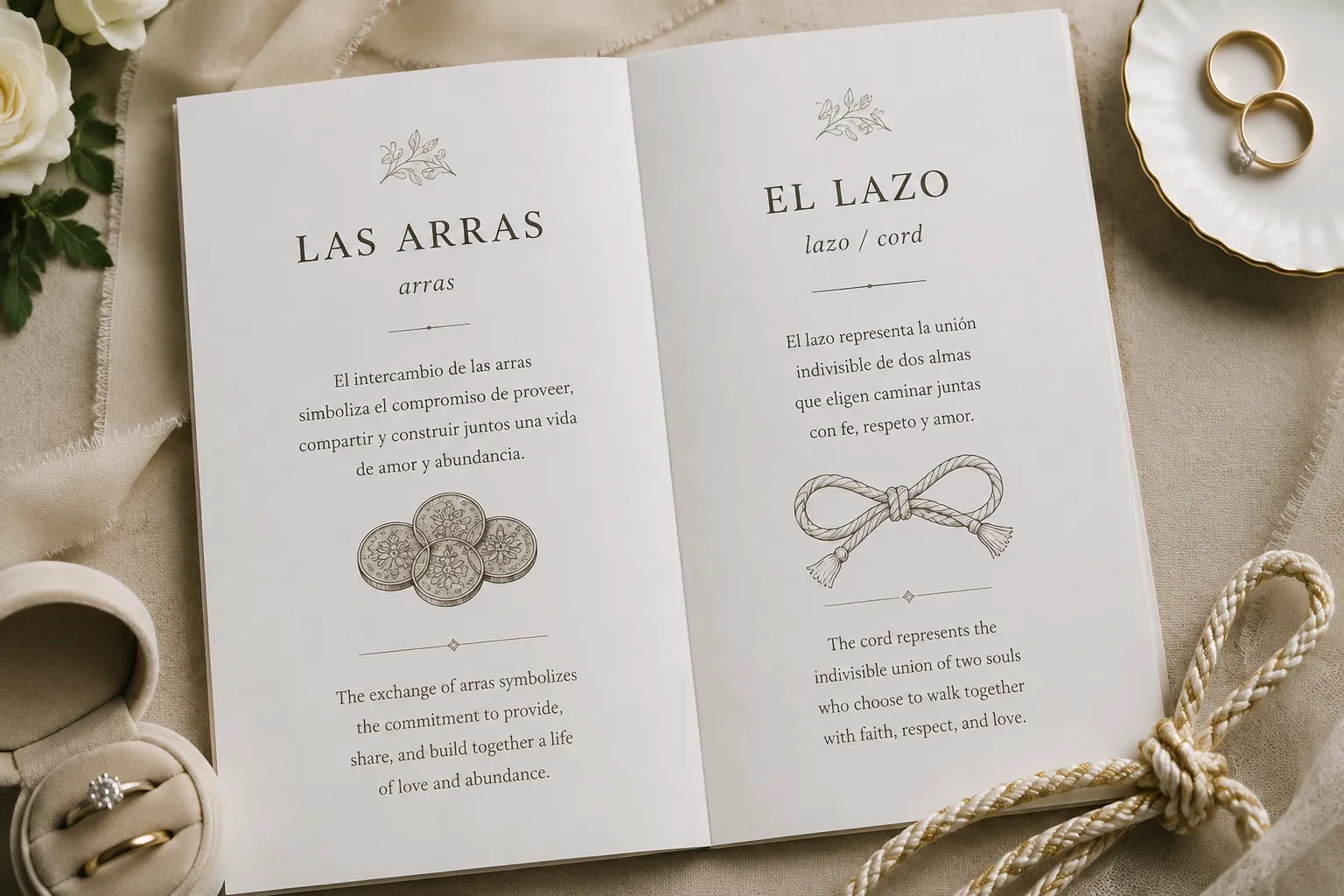
Choose the level of detail according to the program’s purpose and available space. A simple ceremony program usually needs the ritual name, a short explanation, and the names of participating people.
A longer program may also include a family acknowledgment, bilingual labels, or one sentence explaining why the couple included the customs. For example:
Las Arras and El Lazo
These traditions are included in our ceremony with the support of our families. We thank [Participant Names] for participating in these moments.
Keep the wording descriptive when the family has not agreed on a specific meaning. Phrases such as “symbolizes prosperity,” “represents unity,” or “honors our heritage” may suit one couple but feel too broad or inaccurate for another.
Questions to Confirm Before Printing
Settle the wording details before the program goes to design:
- Will the program use “Las Arras,” “arras,” “wedding coins,” or another label?
- Will it use “El Lazo,” “el lazo,” “wedding lasso,” “wedding cord,” or a different term?
- Who will present, carry, place, or participate in each item?
- Should those people be named individually?
- Will their roles be described as padrinos, madrinas, sponsors, family members, or something else?
- Does the couple want English, Spanish, or bilingual wording?
- Should the program describe the custom or simply list the ceremony moment?
Then ask the parish or officiant:
- Which terms are used for these moments?
- Is the ceremony sequence already set?
- Should the program follow a provided order of service?
- Should participant roles be included?
- Is bilingual wording suitable for the service?
Descriptions from another wedding or an older source may provide context, but they should not decide this couple’s wording. Current parish practice, family preference, and the planned ceremony take priority for the printed program.
Keeping the Program Accurate
If the program lists a sequence involving rings, arras, lazo, readings, or blessings, use the order supplied by the parish or officiant. Do not infer it from another ceremony or a stationery sample.
A flexible line can prevent unnecessary corrections:
Special Ceremony Traditions
The couple will include Las Arras and El Lazo with the participation of their chosen family members.
If either custom will also be mentioned during the reception, label that section as a reception acknowledgment. This keeps the reception flow separate from the church ceremony.
Keep Civil Registry Questions Separate
Las Arras and El Lazo are ceremony wording questions. A wedding program does not determine what a civil registry office, consulate, or local authority may request for registration.
When the couple is coordinating civil ceremonies or documents across jurisdictions, they should confirm those matters with the applicable registry office or authority. The program can use a neutral distinction:
Ceremony Note
The following traditions are part of the couple’s planned wedding ceremony. Civil registration arrangements are handled separately with the applicable authority.
A Final Adaptable Template
Use this version after confirming the names, terminology, language, and ceremony order:
Las Arras and El Lazo
During the ceremony, [Couple’s Names] will participate in the presentation of the arras and the placing of el lazo. They thank [Participant Names] for joining them in these traditions.Las Arras: [Optional one-sentence explanation.]
El Lazo: [Optional one-sentence explanation.]
Good wedding program wording is specific about the couple’s plan and measured about wider custom. Name what will happen, credit the people involved, choose language guests will understand, and ask the family and parish to confirm the final details before printing.