
Marriage Certificate Filing and Copies
Planning a Mexican or Mexican-American wedding can involve a parish, family sponsors, bilingual stationery, and a civil registry. A later document request follows a different path.
The practical question is where the civil marriage record was filed and which office holds it now. That answer may point to a state vital records office, county or city clerk, local vital records office, or another record custodian.
These locations are not always the same. The wedding venue, the place where the license was issued, and the office that provides copies can each be different.
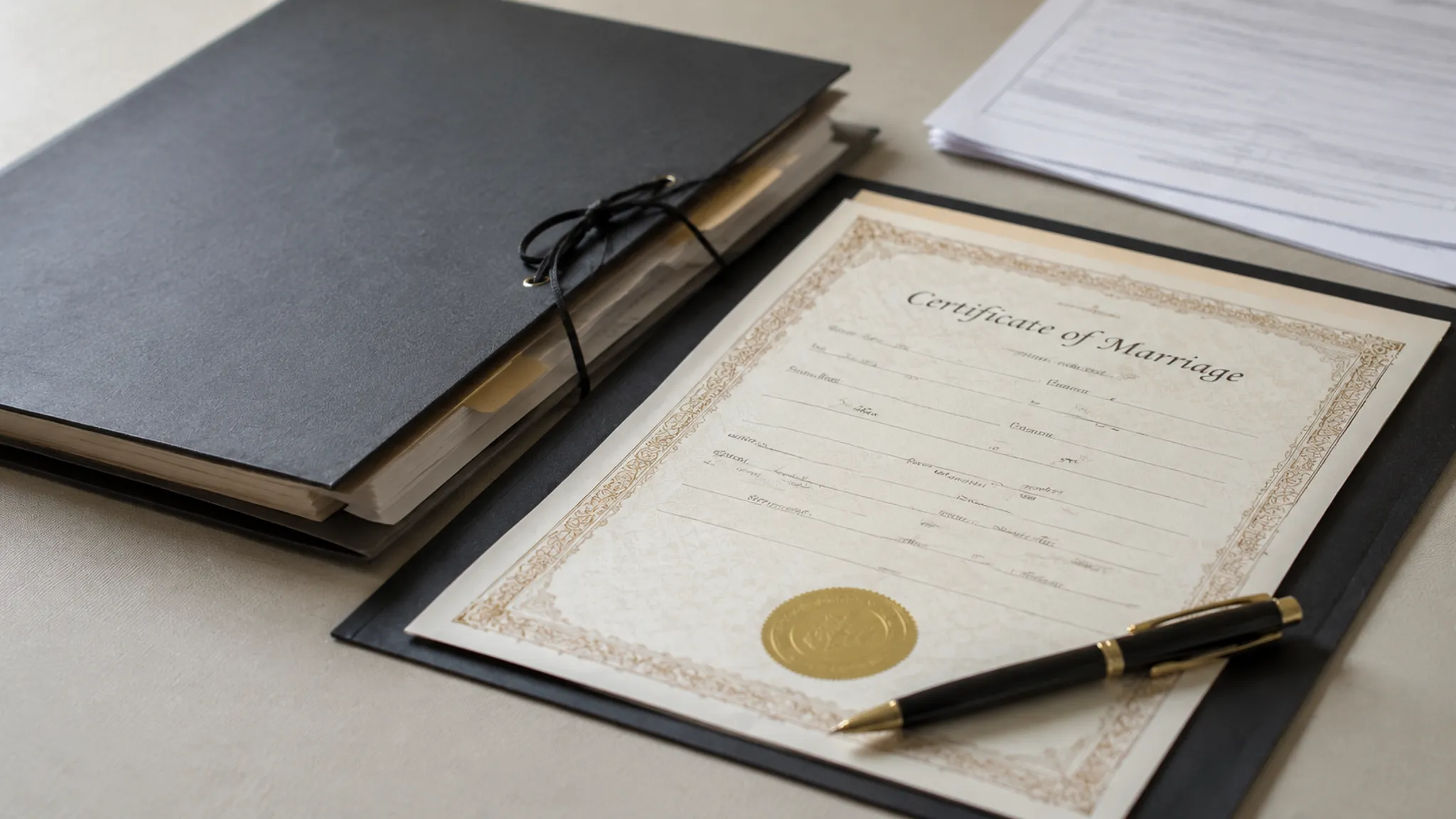
Start With the Marriage Record Filing Location
Begin with the civil record, not the church ceremony or reception venue.
A Catholic parish may keep religious records connected with a wedding. Those records can include a parish certificate, registry entry, or preparation documents, but they are separate from the civil marriage record used for government recordkeeping. Confirm parish records with the parish and civil copies with the relevant registry or vital records office.
Gather the details you already have:
- The state or country where the civil marriage took place
- The county, city, or municipality connected with the license
- The date of the ceremony or filing
- The legal names used when the license was issued
- Former names or spelling variations
- The issuing clerk’s name, if it appears on the license
- Whether the ceremony took place somewhere different from the license office
The issuing or filing jurisdiction is often more useful than the reception location. If the original license is available, inspect it for the issuing office and jurisdiction. If it is not, begin with the state’s current vital-records information or a national locator such as the CDC’s Where to Write for Vital Records.
A directory can help identify the likely office. The relevant local office should still confirm the current marriage record copy process.
State Vital Records Office or Local Vital Records Office?
A state office and a local office may serve different functions. Some jurisdictions organize marriage records through a county clerk, city clerk, town clerk, or another local filing office. A state vital records office may maintain a state-level record, provide a verification service, direct requesters to local custodians, or offer a separate ordering route.
The available sources do not support treating one structure as universal. Use these questions to establish the route:
| Question | Why it matters |
|---|---|
| Where was the marriage license issued? | This may identify the local filing office. |
| Where was the license returned after the ceremony? | The returned document may have been filed with the issuing jurisdiction. |
| Does the state list marriage records centrally? | A state office may provide routing information or its own copy process. |
| Does the state direct requests to a county or city clerk? | The local office may hold the record or issue the requested copy. |
| Are you requesting a copy or a verification letter? | These may be different documents with different uses. |
| Are access rules tied to the requester or the record date? | The office may determine what information or proof is needed. |
The office that helps locate a record is not necessarily the office that issues the requested copy. Confirm both functions before paying a fee or submitting an application.

Marriage Certificate Copy and Verification Letter
People often use “marriage certificate” as a general phrase, while record offices may distinguish among several documents.
A marriage certificate copy may reproduce a recorded marriage document. Depending on the jurisdiction and request, it may be described as certified, informational, or another category. The available sources do not establish one nationwide format or access rule.
A verification letter may confirm that a marriage record was found in a state system. It may not be the same as a certified copy of the marriage record or license. In some situations, a verification search can help identify the county or local office where the underlying copy should be requested.
Before ordering, ask the receiving organization what it needs:
- A copy of the recorded marriage record
- A certified copy
- An informational copy
- A verification letter
- A copy for personal records
- A document for a specific administrative or immigration-related request
Do not assume that a verification letter replaces a copy. A document described as a “marriage certificate” may also have limitations that matter to the organization receiving it.
How to Request a Marriage Certificate Copy
A practical marriage record copy request usually has four stages.
1. Identify the jurisdiction
Find the state, county, city, or municipality connected with the civil filing. If the marriage occurred out of state, begin with the vital statistics office in the state where the marriage occurred rather than the state where the couple now lives.
For a Mexican-American couple, this distinction can matter when one partner lives in one state, the ceremony takes place in another, and the parish is somewhere else. Current residence does not necessarily identify the office holding the marriage record.
2. Locate the record custodian
Use the state’s current vital records information or a national directory to identify the likely office. The custodian may be a state office or a local clerk’s office.
Read the custodian’s current instructions before preparing the request. The materials reviewed for this page do not support universal claims about fees, processing times, identification, eligibility, or ordering methods.
3. Confirm access and document categories
Ask whether the office issues the type of copy you need and which requester category applies. A jurisdiction may distinguish among a person named on the record, a spouse, a family member, an authorized representative, or another requester.
Access can also vary with the record’s age, the relationship between the requester and the people named, and whether the copy is certified or informational.
4. Submit through the current channel
The office may describe online, mail, or in-person options. Follow the custodian’s current instructions instead of relying on an older form, a third-party ordering page, or a procedure from another state.
Keep a record of the following:
- The office contacted
- The jurisdiction and filing location
- The type of copy requested
- The date of the request
- Any confirmation number
- The information or identification the office says it needs
- The name of the receiving organization, if the copy has a specific purpose
This record makes follow-up easier when family members coordinate a request across states or countries.
Who Returns the Signed Marriage License After the Wedding?
This question relates to the filing process, but it does not have one nationwide answer.
In a narrowly documented historical Massachusetts example, the officiant returned the signed original license to the city or town clerk that issued it. That example illustrates one workflow. It does not establish a current rule for every state, county, officiant, parish, or ceremony setting.
Responsibility may depend on the jurisdiction’s instructions and the role of the person who solemnized the ceremony. It may also depend on whether the license was issued by a local clerk, county office, or another civil authority.
Before the wedding, ask the issuing office:
- Who is responsible for returning the signed license?
- Which office should receive it?
- Is the original returned by the officiant, the couple, or another person?
- Does the office provide confirmation after filing?
- When should the couple begin asking about a copy?
- What should the couple do if the license is lost, damaged, or returned with an error?
Ask the officiant separately which documents they expect to handle. A parish’s religious ceremony workflow should not be treated as a substitute for the civil registry’s instructions.

Why Wedding Location Can Cause Confusion
A Mexican or Mexican-American wedding may involve several locations:
- The parish where the Catholic ceremony takes place
- The civil registry or clerk’s office that issues the license
- The venue where the reception takes place
- The couple’s current residence
- A different state or country where family members live
These places can produce different records and responsibilities. For example, a couple may have a Catholic ceremony at a parish, hold the reception in another municipality, and obtain the civil license through a county office. The parish may document the religious ceremony, while the civil office handles the recorded marriage license.
A later copy request should begin with the civil filing jurisdiction. If the civil marriage occurs in a different state or country from the reception, identify that jurisdiction before finalizing the document plan. Ask the relevant civil registry, local authority, consulate, or record custodian which office holds the record and how copies are requested.
What to Confirm Before Requesting a Copy
Use this preparation sheet before opening an online request or contacting an office.
Record details
- Full names at the time of marriage
- Current names, if different
- Date or approximate date of marriage
- State and local jurisdiction
- Marriage license number, if available
- Name of the issuing office
- Approximate filing date, if known
Request details
- Why the copy is needed
- Whether the recipient asked for a certified copy or another document
- Whether one copy or multiple copies are needed
- Whether the requester is one of the people named on the record
- Whether the request concerns another person’s marriage record
- Whether the office provides a record search or verification option
Confirmation questions
- Which office holds the record?
- Does that office issue copies directly?
- Is a state-level request different from a local request?
- What access category applies?
- What information or identification is currently requested?
- Which application channel is current?
- Does the office distinguish a verification letter from a marriage certificate copy?
- Should the request go to the state, county, city, or town office?
The purpose is not to assemble a universal checklist. It is to identify the right office and learn that office’s current process.
Common Mix-Ups
The parish certificate is the civil record
A Catholic parish may maintain records of a religious ceremony, but that does not identify the civil record custodian. Keep church documentation and civil registration as separate planning tracks.
The reception location holds the record
The venue may matter to the celebration, but it does not establish where the marriage license was filed. Check the issuing jurisdiction instead.
The state office issues every copy
A state vital records office may provide information or a state-level service while a local clerk holds or issues the underlying record. This structure varies.
A verification letter equals a certified copy
These terms can describe different documents. Ask the receiving organization which document it will accept for its particular purpose.
One state’s process applies elsewhere
California, Texas, Massachusetts, Maine, New Hampshire, and other jurisdictions appear in different record discussions and historical materials. Those examples show variation, not a single national process.
Do not transfer a fee, deadline, identification rule, access category, or filing instruction from one jurisdiction to another without checking the current source.
When the Record Cannot Be Located
If a local office cannot find the record, ask what kind of search was performed and whether another custodian may hold the filing.
Useful follow-up questions include:
- Was the search based on the legal names used at the time?
- Could the license have been issued in another county or municipality?
- Does the state maintain a separate index or verification process?
- Was the record filed under a different spelling or former name?
- Is the record old enough to follow a different access or storage process?
- Can the office identify the jurisdiction even if it cannot issue the copy?
A state search may help route a requester to a local filing office. Routing is different from issuing the copy, so confirm the next step with the relevant custodian.

Planning Across Languages and Family Roles
The request should use the names and details shown in the civil record. Family members may use Spanish names, English translations, married names, nicknames, or different spellings in conversation. Record the legal wording separately from family wording before submitting a request.
If a parent, padrino, madrina, planner, or relative is helping, decide who will:
- Locate the filing jurisdiction
- Contact the record custodian
- Confirm the requested document type
- Track the request
- Receive the copy
- Forward it to the organization that requested it
This division can help when a bilingual wedding involves document coordination across states or countries. A family member can assist with communication, while the office’s current instructions should control the request.
Questions to Ask the Relevant Office
- Which office holds the marriage record for this license?
- Do I request the copy from the state office or a local clerk?
- What document types are available?
- How does the office distinguish a certified copy from a verification letter?
- Which requester category applies to me?
- What current information or identification should accompany the request?
- Is the current request submitted online, by mail, or in person?
- Who should I contact if the record cannot be located?
- If the license was issued in another jurisdiction, where should I direct the request?
- Who can confirm whether the signed license was filed?
These questions separate known facts from assumptions. They also reduce the chance that a family member orders the wrong document based on a familiar but imprecise phrase.
Final Decision Path
- Identify where the civil marriage license was issued or filed.
- Separate that jurisdiction from the parish and reception locations.
- Locate the state or local office that may hold the record.
- Confirm whether it issues the copy or only provides routing or verification information.
- Identify the document type requested by the recipient.
- Review the custodian’s current access and ordering instructions.
- Ask who is responsible for filing the signed license if the record has not appeared.
- Keep the request confirmation and follow up with the same office.
For Mexican and Mexican-American wedding planning, this document task sits alongside the ceremony sequence, family roles, and reception flow, but it remains its own track. The parish can clarify religious records. The civil registry or relevant record custodian can clarify filing and copy requests. The next step depends on the jurisdiction holding the marriage record.