How to List Padrinos and Madrinas on Wedding Programs and Invitations
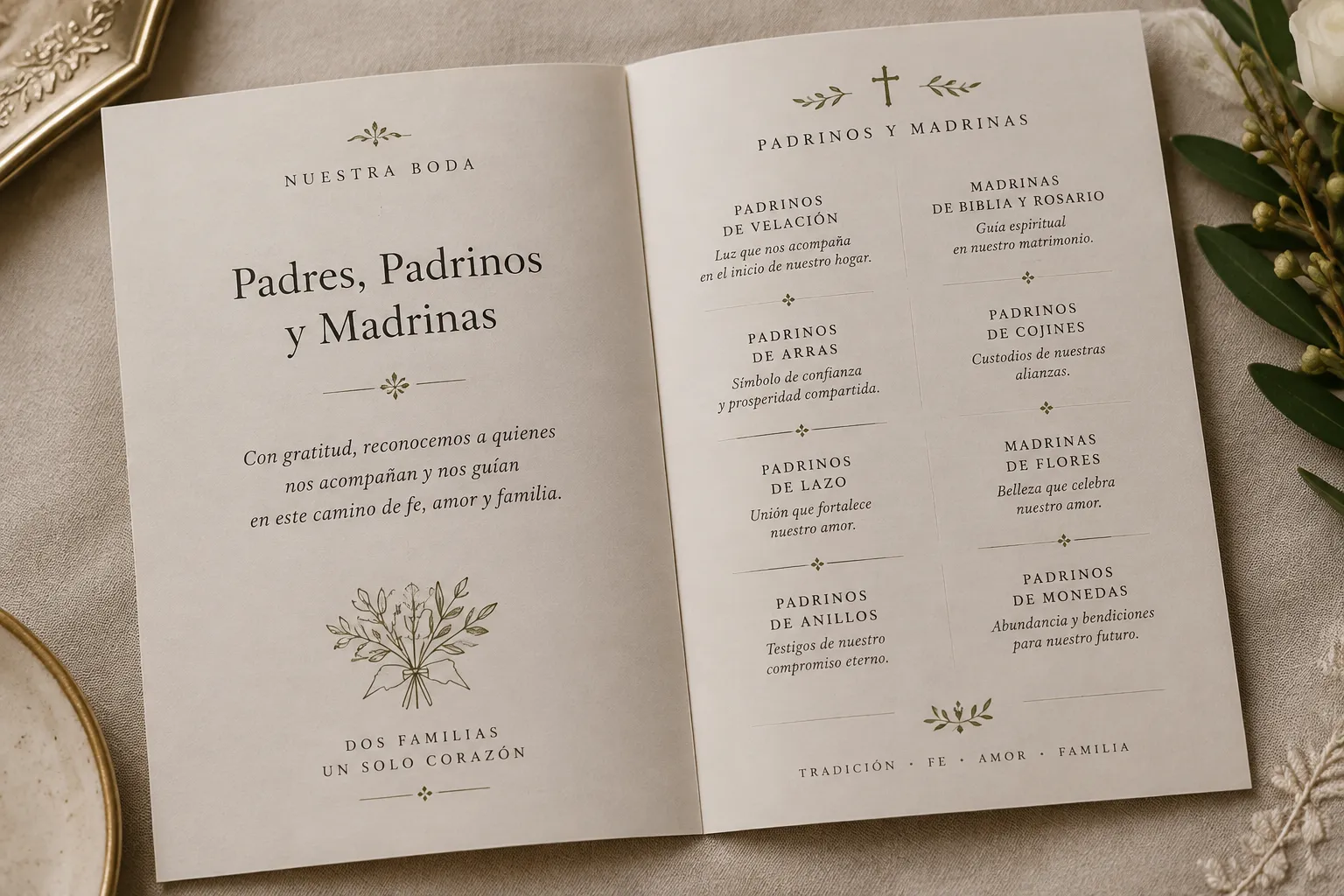
List padrinos and madrinas in a separate section with a clear heading, their preferred full names, and a brief role description when guests need the context.
For example:
Padrinos and Madrinas
María and José Hernández
Padrinos de Velación
Or:
Wedding Sponsors
María Hernández and José Hernández
Sponsors for the Lazo Ceremony
There is no single wording formula for every Mexican or Mexican-American wedding. The names may recognize a ceremony role, a family relationship, support connected with a particular item, or the couple’s wish to honor important people. Treat the wording as a planning choice unless your parish, venue, or family has requested something specific.
Where to List Padrinos and Madrinas
The right placement depends on what the stationery needs to communicate.
On the Wedding Program
A program usually gives you enough space to explain several ceremony roles. Place the names after the main ceremony participants or immediately before the ceremony outline.
- Couple’s names
- Parents
- Officiant
- Wedding party
- Padrinos and madrinas
- Ceremony sequence
- Reception information
You can also place a sponsor section near the ceremony element connected with the role. For example, padrinos de lazo may appear beside a short explanation of the lazo ceremony, if your ceremony includes one.
Our Wedding Ceremony
Bride: Elena García
Groom: Daniel Rivera
Parents
Ana and Luis García
Rosa and Miguel Rivera
Wedding Party
Maid of Honor: Sofia García
Best Man: Mateo Rivera
Padrinos and Madrinas
Padrinos de Velación: Carmen and Roberto López
Padrinos de Anillos: Patricia and Andrés Morales
Padrinos de Lazo: Lucía and Fernando Cruz
This is a layout example, not a universal ceremony order. Ask the parish whether the titles and sequence fit your service before printing the program.
On the Wedding Invitation
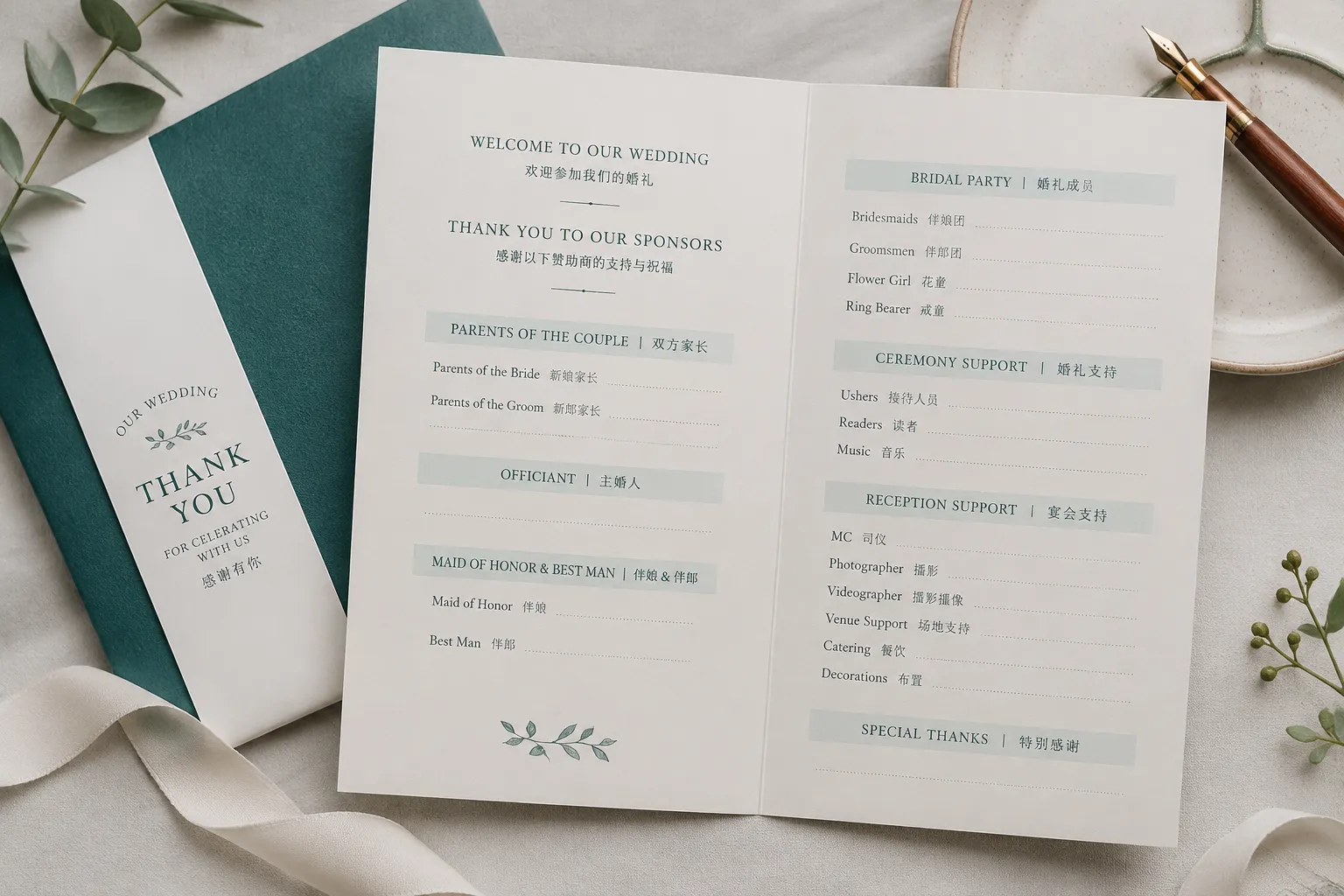
Invitations generally need less detail than programs. Include padrinos and madrinas when their family role is central to the invitation, relatives expect the names to appear, or the couple wants to recognize them prominently.
Possible placements include:
- Below the couple’s names
- Below the parents or hosts
- On a separate details card
- On the back of the invitation
- On a digital invitation or wedding website
- In the program instead, when the invitation feels crowded
A formal invitation might use:
With the blessing of their parents and the support of their padrinos and madrinas
Carmen and Roberto López
Patricia and Andrés Morales
A less formal version could say:
With love and gratitude to our padrinos and madrinas
Carmen and Roberto López
Patricia and Andrés Morales
Make the relationship clear. Guests should be able to tell whether the names identify ceremony sponsors, honored family members, or hosts.
Who to Include as Padrinos and Madrinas
Begin with the complete list used by the couple and both families. Then sort the names by purpose instead of placing everyone on every piece of stationery.
- People with a specific ceremony role
- A couple connected with one ceremony item
- Family members recognized as padrinos by local or family custom
- Close relatives or friends the couple wants to honor
- People participating in the religious ceremony
- People supporting a reception element or family celebration
Ask what the listing is meant to accomplish:
- Recognize a ceremony role
- Acknowledge family support
- Help guests understand who participates
- Meet a family expectation
- Identify people connected with a particular object or ritual
The answer determines whether each name needs a title or explanation. A long list may work in the program, while the invitation may mention only the principal padrinos and madrinas.
Documented Mexican wedding contexts connect sponsor labels with particular objects or moments, including rings, arras, lazo, a Bible, or medals. These examples describe localized practices rather than a universal list for every Mexican Catholic wedding. Before using a specific Spanish title, ask the parish whether it uses that term and ask the named people how they want their names presented.
Padrinos Wedding Program Wording Examples
Use these as adaptable wording options, not required formulas.
English Wording
Padrinos and Madrinas
Carmen and Roberto López
Patricia and Andrés Morales
Ceremony Sponsors
Carmen and Roberto López
Patricia and Andrés Morales
With Gratitude to Our Padrinos and Madrinas
Carmen and Roberto López
Patricia and Andrés Morales
Special Family Roles
Carmen and Roberto López
Patricia and Andrés Morales
“Ceremony Sponsors” can help guests who do not know the Spanish term. “Padrinos and Madrinas” keeps the family wording visible while remaining understandable to bilingual guests.
Spanish Wording
Padrinos y Madrinas
Carmen y Roberto López
Patricia y Andrés Morales
Padrinos de Velación
Carmen y Roberto López
Padrinos de Anillos
Patricia y Andrés Morales
Padrinos de Lazo
Lucía y Fernando Cruz
Con gratitud a nuestros padrinos y madrinas
Carmen y Roberto López
Patricia y Andrés Morales
Use Spanish titles when they match your family’s wording and the ceremony context. A title should not suggest a formal church role unless that role has been confirmed with the parish.
Bilingual Wording
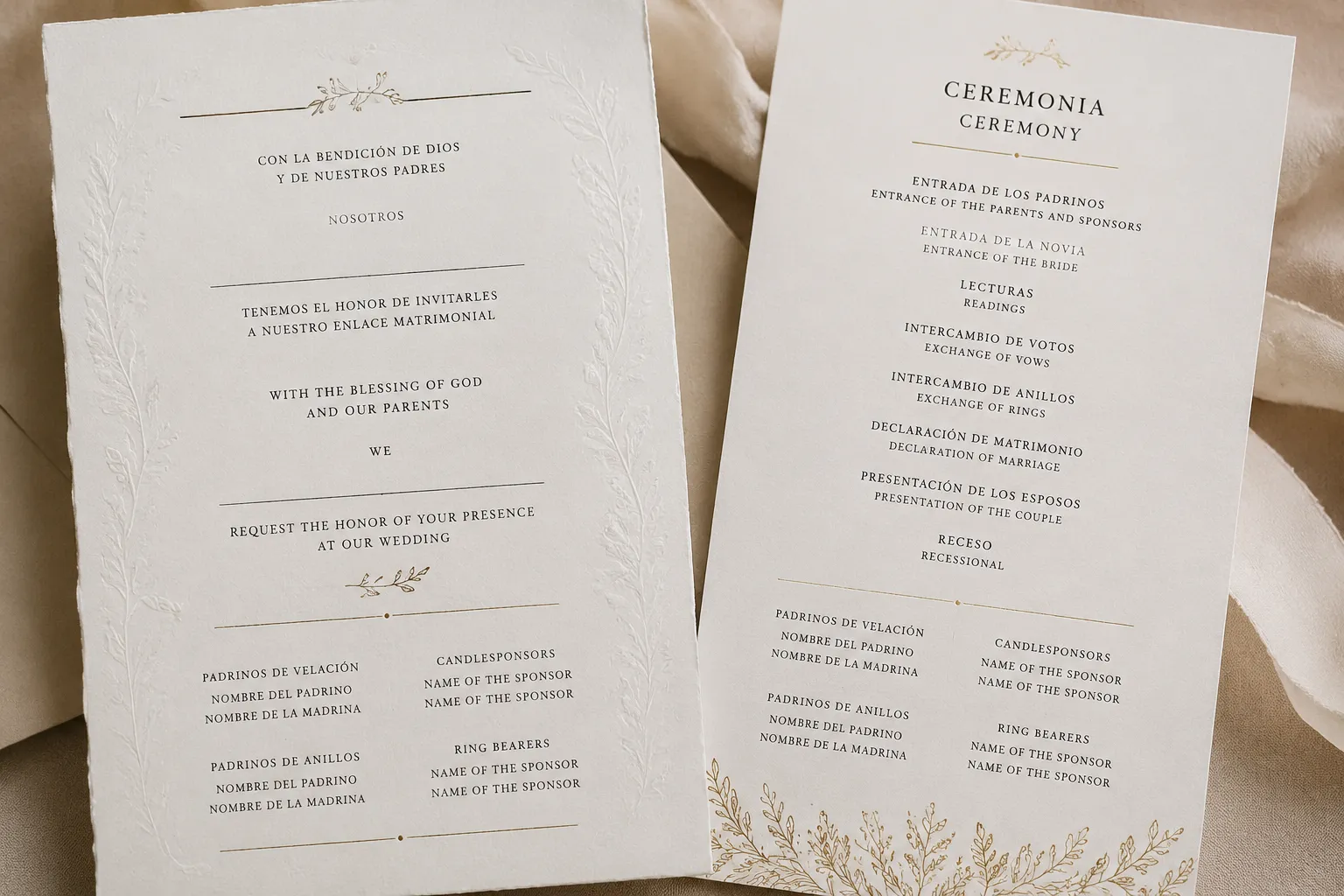
Padrinos de Velación / Ceremony Sponsors
Carmen and Roberto López
Padrinos de Anillos / Ring Sponsors
Patricia and Andrés Morales
Padrinos de Lazo / Lazo Ceremony Sponsors
Lucía and Fernando Cruz
Short paired translations work well when some guests read Spanish and others read English. Keep the format consistent throughout the program.
Spanish Titles for Individual Names
When people have separate roles, list each person individually:
Padrino de Anillos: Andrés Morales
Madrina de Anillos: Patricia Morales
When a couple shares one role, a plural form may be clearer:
Padrinos de Lazo: Lucía and Fernando Cruz
You can also use a broad heading and avoid repeating a title beside every name:
Padrinos y Madrinas de la Ceremonia
Carmen and Roberto López
Patricia and Andrés Morales
Do not add honorifics, professional titles, or family labels unless the person and family have requested them. Write each name in the form the honoree prefers.
How to Decide Which Names Belong on the Invitation
Keep the invitation focused on the people being invited and the event details. Use the program when the list is long, the roles differ, or guests need the information during the ceremony.
The program is usually the better location when:
- Several sponsor pairs are involved
- Each pair has a different ceremony role
- The invitation has limited space
- Guests need the names during the ceremony
- Spanish titles need brief explanations
- The names are an acknowledgment rather than part of the invitation itself
If family members expect the padrinos to appear on the invitation, ask whether they prefer all names or only the principal pair. That conversation can prevent an omission without forcing every family role into the invitation design.
Custom, Family Preference, and Ceremony Requirement
Keep these categories separate while you plan.
- Custom
- A practice common in some families or communities. Familiarity does not make it applicable to every wedding.
- Family preference
- What parents, padrinos, madrinas, or extended family would like to see printed.
- Couple’s preference
- The wording, language, and layout that fit the ceremony and its guests.
- Institution-specific guidance
- A request or rule from a parish, venue, civil registry office, consulate, or other responsible institution.
The available cultural material does not establish one standard sponsor list or one required way to name padrinos and madrinas. If the wording relates to the Catholic ceremony, ask the parish whether the titles and roles are accurate. Questions about civil documents belong with the relevant civil registry office or local authority. Placement, rehearsal, timing, and distribution questions belong with the venue.
Common Layout Choices
One Combined List
This suits a small group:
Padrinos and Madrinas
Carmen and Roberto López
Patricia and Andrés Morales
Lucía and Fernando Cruz
Grouped by Role
This helps when each pair is connected with a different ceremony element:
Padrinos and Madrinas
Padrinos de Velación
Carmen and Roberto López
Padrinos de Anillos
Patricia and Andrés Morales
Padrinos de Lazo
Lucía and Fernando Cruz
Paired Bilingual Lines
This format keeps both languages visible without adding long explanations:
Padrinos de Velación
Ceremony Sponsors
Carmen and Roberto López
Padrinos de Anillos
Ring Sponsors
Patricia and Andrés Morales
Consistent spacing and naming matter more than decorative wording.
Before Printing
Review the list with the couple, the named padrinos and madrinas, and the relevant ceremony or event contact.
- Check every spelling and preferred name.
- Keep couples together when that reflects the intended role.
- Confirm that Spanish titles match the ceremony context.
- Make sure English translations do not overstate a role.
- Use consistent names on the invitation and program.
- Ask the parish about ceremony-specific terminology.
- Ask the venue about program placement or distribution.
- Discuss family expectations before final printing.
The clearest approach is usually a separate heading, full names, and a short role description only when it helps guests follow the ceremony. Keep the invitation concise, use the program for fuller recognition, and confirm variable details with the person or institution responsible for them.
Sources
- Son del guajolote: ceremonias nupciales en San Miguel Suchixtepec, Oaxaca
- “Avisa a tus padres que van a ir a pedir tu mano el domingo”. Estudio etnográfico sobre el simbolismo del ritual de boda en Almoloya del Río
- Wedding padrinos and family participation in a Purépecha community
- Atlanta's Quinceañeras