
Civil Wedding Appointment and Witness Planning
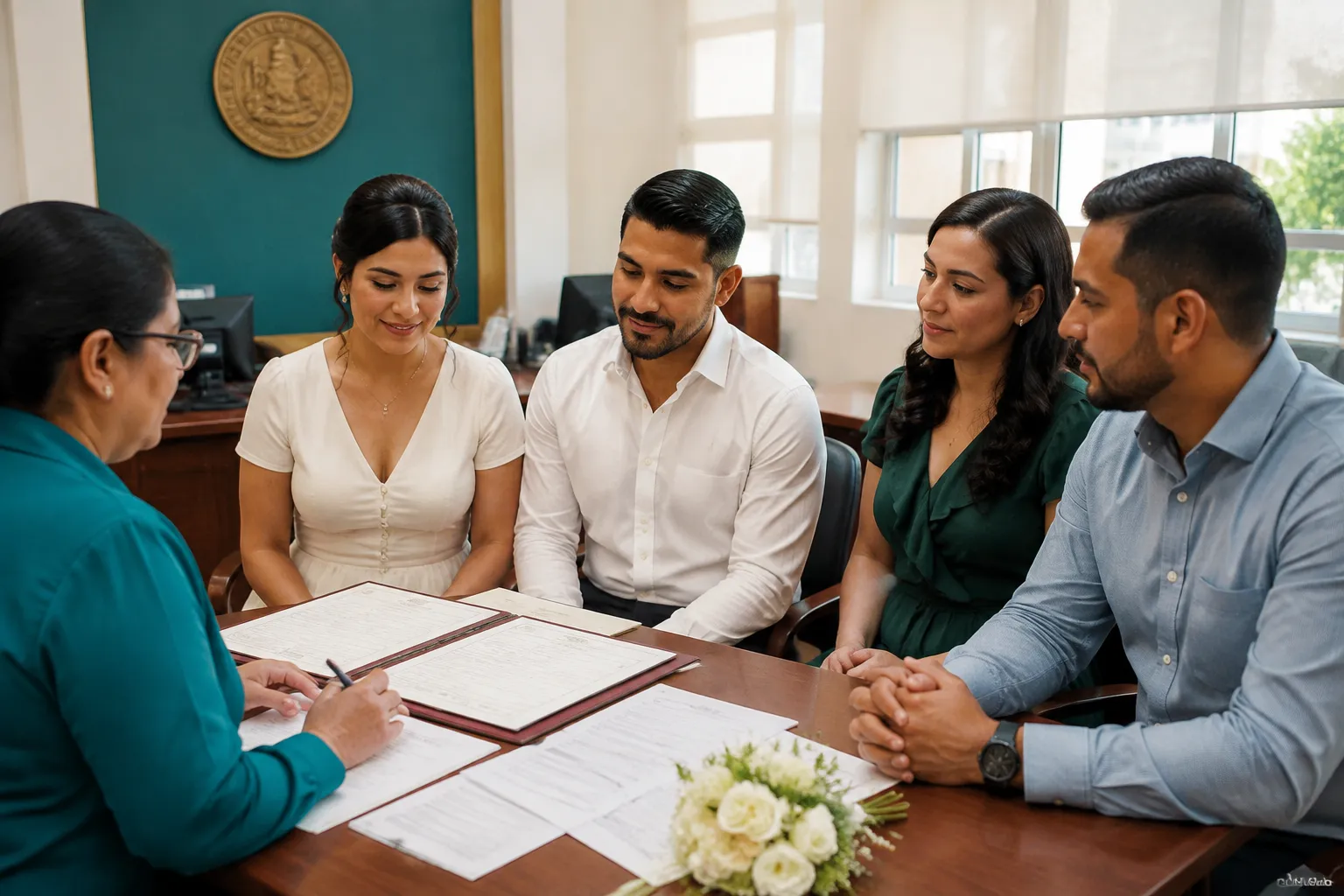
Choosing civil wedding witnesses involves more than naming close relatives. The couple must first establish how many witnesses the local office expects, who may serve, what identification they need, and when they must attend or sign.
For a civil marriage in Mexico, begin with the Civil Registry Office handling the appointment. Available public guidance separates civil registration from religious ceremonies, but it does not establish one current witness process for every state or municipality. Requirements can also change with the registry office, nationality, ceremony format, and administrative route.
Map the Appointment Before Choosing Witnesses
Start by identifying the office that will review the documents, conduct the civil act, and manage the completed record. One office may handle the full process, or the couple may move through separate application, review, ceremony, and record-collection stages.
Do not assume that submitting an application reserves a ceremony time. Ask whether the couple needs separate bookings and whether witnesses attend every stage or only the civil ceremony.
Questions for the Civil Registry Office
- How many civil wedding witnesses must attend?
- Are there age, residency, relationship, or language conditions?
- When must witness names and personal details be submitted?
- Which original identification documents are accepted?
- Must witnesses appear and sign in person?
- Can witness details be changed after submission?
- Is an interpreter permitted or requested for anyone unable to follow the proceedings?
- Are translations needed for foreign-language records or identification?
- Where will the signing occur, and who manages the completed record?
- How can the couple request copies after the appointment?
Record the office name, confirmation date, staff instructions, and appointment reference. This gives the couple one working version of the process instead of several conflicting family messages.
Confirm the Witness Number and Attendance Limits
There is no sound basis for applying one witness number to every Mexican civil wedding. Some destination-wedding guides mention four witnesses, but that figure may reflect a particular municipality, package, venue arrangement, or earlier practice.
Administrative procedures elsewhere also show how much the answer can vary. Some jurisdictions use two witnesses, while others connect witness arrangements to the license or ceremony format. California county procedures, for example, differ by license and ceremony pathway. These examples illustrate variation; they do not define Mexican registry practice.
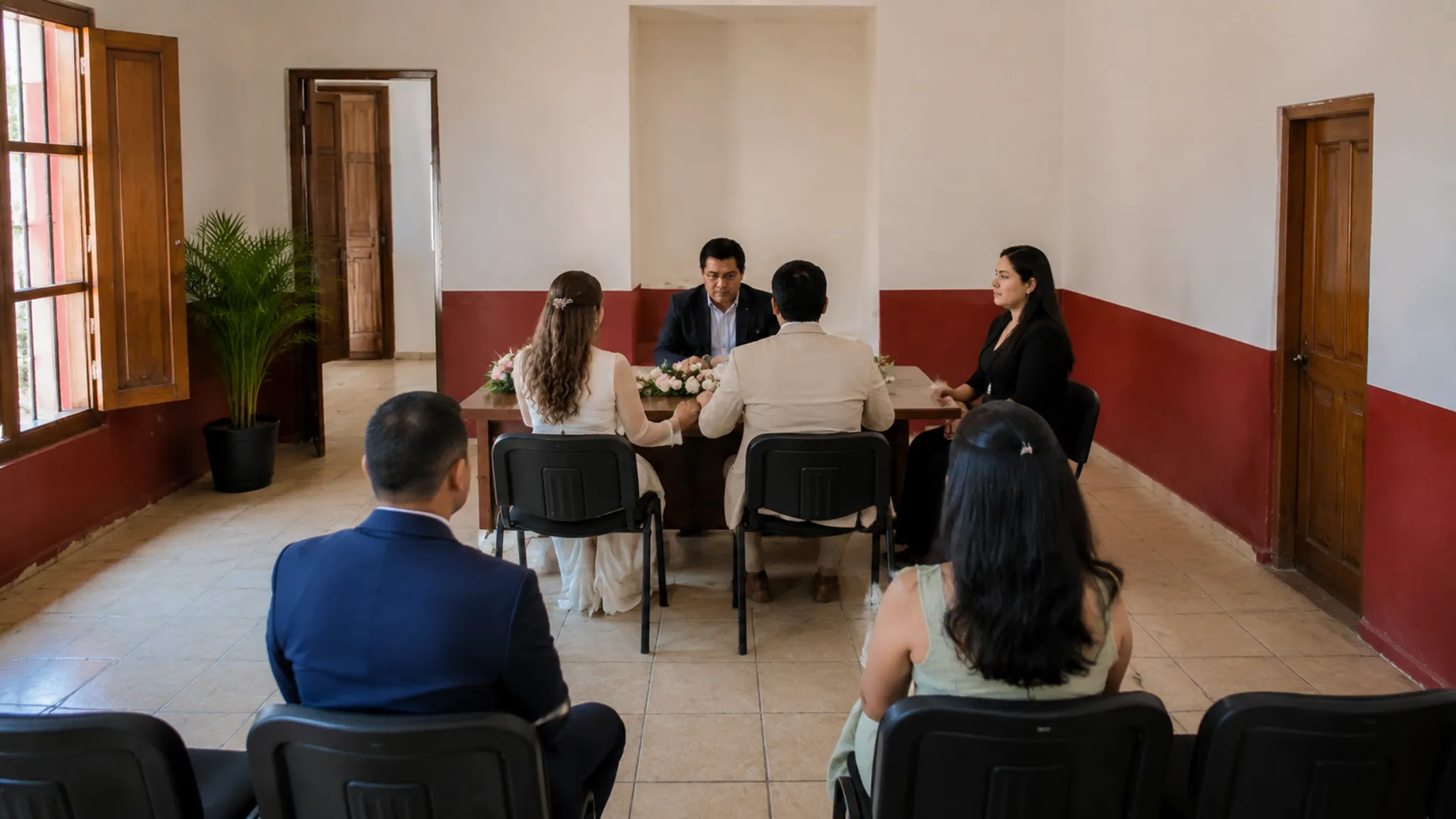
Ask about both the required number and the room limit. A small registry space may accommodate only the couple, witnesses, staff, and an interpreter. Additional relatives can join the church ceremony, symbolic ceremony, photographs, or reception without being part of the civil appointment.
Separate Eligibility From Family Importance
A dependable relative is not automatically eligible to serve as a civil witness. Local conditions may concern age, identification, comprehension, advance registration, or other details set by the responsible office.
Resolve eligibility before making a family announcement. Reassigning someone after presenting the position as an honor can create unnecessary tension, especially when padrinos, madrinas, parents, and siblings are already taking other parts in the wedding.
After the registry conditions are clear, compare possible witnesses by practical readiness:
- Availability: Can the person arrive early and remain through document review and signing?
- Identification: Do they have the accepted original document in usable condition?
- Name consistency: Does the submitted name match the identification they will present?
- Language: Can they follow staff instructions, or has permitted support been arranged?
- Travel exposure: Are they relying on a same-day flight, border crossing, or tight connection?
- Communication: Will they monitor appointment updates and report problems promptly?
- Schedule control: Can they avoid another wedding duty immediately afterward?
Seniority and family expectation can guide the social decision, but they should not override the conditions attached to the appointment. Other relatives can receive church, reception, reading, procession, or symbolic roles.
Verify Witness Identification and Recorded Names
Civil wedding witness identification needs a separate check because document practices vary. One office may accept a passport, while another may request a different form of identification or additional recorded details.
Ask whether documents must be current, presented in their original form, or accompanied by copies. International and diaspora planning may also raise questions about foreign-issued identification, addresses, nationality fields, document language, and translations.
Do not plan around a photograph stored on a phone unless the registry has expressly accepted that format. Digital copies can help with travel coordination, but they may not replace the document requested at the appointment.
Review names early when a witness uses compound surnames, multiple given names, accents, initials, a married name, or different naming conventions across records. The briefing should use the name shown on the identification, while registry staff should resolve how any difference is entered.

Keep Administrative and Ceremonial Roles Distinct
A civil witness, registrar, officiating person, interpreter, and family coordinator have different responsibilities. Do not assume that one person may cover another assignment without confirmation from the responsible authority.
| Participant | Planning responsibility |
|---|---|
| Couple | Confirm the appointment, documents, witness conditions, and record process. |
| Civil witness | Attend, present requested identification, observe the civil act, and sign when directed. |
| Registrar or officiating person | Conduct or supervise the civil procedure under the local process. |
| Interpreter | Provide permitted language support under the office's stated conditions. |
| Document coordinator | Carry the couple's paperwork and track what happens to the completed record. |
| Family contact | Coordinate waiting relatives, transport, access, and schedule changes. |
The same person may hold several family or social positions. That overlap does not merge the administrative duties.
Separate Civil Witnesses From Padrinos and Madrinas
Civil and religious ceremony roles often become blurred in Mexican and Mexican-American wedding planning. A couple may have a registry appointment, a Catholic ceremony, a symbolic ceremony, or several events with different participants.
In many Mexican Catholic weddings, padrinos and madrinas support family or ceremonial elements such as las arras or el lazo. Their participation varies by family and parish, and the title does not automatically make someone a civil witness.
Someone who signs a church record or stands beside the couple during a religious service is also not necessarily part of the civil process. Ask the parish who participates in the Catholic ceremony, then ask the registry who must attend the civil appointment.
One couple might choose eligible relatives for the registry and assign other family members as padrinos, madrinas, readers, or attendants. Another might use the same people in both settings. Either arrangement requires separate planning for each institution.
Symbolic attendants should be treated the same way. They may witness vows before family and guests without taking on a civil registry duty.

Plan Language Support Without Combining Roles
Language planning should account for the couple, witnesses, and administrative staff. A bilingual relative should not be assigned as an interpreter merely because that person is already attending.
Ask whether the office conducts appointments in the preferred language, permits a couple-provided interpreter, or places conditions on who may interpret. Also establish whether advance notice, a separate booking, or translated records are needed.
If the couple wants bilingual wording, readings, rings, music, prayers, or symbolic elements during the civil ceremony, ask whether those additions are permitted before printing the program. Required formalities and optional content may be handled separately, and practices can differ by office or ceremony setting.
Brief Civil Wedding Witnesses Before the Appointment
Send one consolidated briefing several days before the appointment. It should be short enough to use on a phone while still covering the details that could delay arrival or signing.
Witness Briefing
- Registry name, appointment location, meeting point, date, and arrival time.
- The couple's primary contact and a backup contact.
- The original identification each witness must carry.
- The exact personal details previously given to the registry.
- Transport, parking, building access, and accessibility information.
- The expected waiting, document-review, and ceremony sequence.
- Interpreter or language arrangements.
- Instructions to sign only when staff direct them.
- The response plan for delay, illness, or document problems.
- Whether the witness is also expected at the church, photographs, or reception.
Keep registry instructions separate from the couple's preferences. Dress requests, photography plans, and reception timing may matter, but they should not be presented as civil witness conditions.
Couple's Document Check
- Appointment confirmation and current contact details.
- Documents requested from both partners.
- Original witness identification and any requested copies.
- Confirmed spelling of witness names.
- Translations or foreign-document support requested by the office.
- Interpreter confirmation, when applicable.
- Payment method if a payment is due.
- Transport plan and an arrival margin.
- The person responsible for carrying the couple's paperwork.
- The stated process for the completed record.
Each witness should retain control of their identification until staff request it. The couple's working documents can remain with one named coordinator.
Manage Arrival, Signing, and the Completed Record
At the meeting point, confirm that both partners, every required witness, and any interpreter are present. Check original identification and report spelling differences before signing begins.
Witness signatures may occur during the ceremony, immediately afterward, or at another stage in the appointment. Do not pre-fill signature fields unless staff instruct the couple to do so. Witnesses should review the fields presented to them and ask staff about apparent errors rather than altering registry documents themselves.
Before leaving, establish whether every required person has signed, who retains the completed document, and whether another office receives it. Ask about any collection date, receipt, reference number, copy-request process, or correction contact that applies to the appointment.
Keep decorative certificates, church records, ceremony programs, and civil registry paperwork labeled separately. Similar-looking documents may serve different purposes.

Build a Backup Plan the Registry Can Use
A backup plan should cover witnesses, documents, transport, communication, and language support. It should not assume that a close relative can replace someone at the last minute.
Ask when witness information becomes fixed, whether an alternate may be named, and how substitutions are reported. Find out whether an alternate must submit identification in advance and whom to contact if a primary witness is late.
Evaluate an alternate using the same eligibility, identification, language, and availability questions. For an international or bilingual appointment, prepare separately for an interpreter problem because a substitute witness may not be able to fill that function.
Common Witness Planning Misunderstandings
- "Our padrinos can sign." They may qualify, but their family title does not establish eligibility.
- "The church ceremony covers the civil process." The parish and civil registry manage separate procedures.
- "The planner said we need four witnesses." Ask which municipality, office, and ceremony format that statement describes.
- "We completed the form online." Online submission may still be followed by an appearance, document review, or signing stage.
- "A passport photo is enough." The office may expect the original document.
- "The witness can translate." Witness and interpreter duties may have separate conditions.
- "The application appointment includes the ceremony." These may be different bookings.
- "The person conducting the ceremony handles the record." Responsibility for the completed document varies by process.
- "Any relative can substitute." Eligibility and advance submission may still matter.
Resolve these points with the office managing the appointment, then distribute one updated plan. Civil wedding witnesses should know where to arrive, what to bring, when to sign, and when their administrative part ends. Religious and family honors can then be arranged around that sequence without being mistaken for registry duties.