Civil and Religious Wedding Sequencing
Planning a civil and church wedding involves more than choosing two dates. The sequence affects parish conversations, civil registry questions, family roles, guest expectations, travel, photography, attire, and the handoff to the reception.

For couples planning a Mexican or Mexican-American wedding, begin by separating four decisions that are often blended together:
- Civil procedure: what the relevant civil registry office or local authority asks you to arrange.
- Parish procedure: what the parish or diocese asks before a church wedding.
- Family custom: how relatives expect the celebration to unfold.
- Event preference: what feels practical for the couple, family, and guests.
These categories can overlap, but they are not interchangeable. A family may describe one order as traditional while the parish or registry office follows a different process. Details can vary by state, venue, parish, and cross-border circumstances.
Choose Same-Day or Separate-Day Ceremonies
The first sequencing decision is whether the civil ceremony and church ceremony will happen on the same day or on separate days. Neither arrangement should be treated as a universal Mexican sequence. The useful comparison is how each option affects timing, participation, travel, and confirmation work.
Same-Day Civil and Church Ceremonies
A same-day plan can give guests one shared celebration and reduce the number of dates relatives need to attend. It may also connect the civil ceremony, church wedding, photographs, and reception into one visible progression.
The schedule becomes less forgiving when the civil registry office, church, photography location, and reception venue are in different places. A private civil appointment can also leave guests uncertain about which part of the day they should attend.
Before choosing this format, confirm:
- Whether the civil ceremony can be scheduled at the needed time and location.
- Who must attend, provide information, witness signatures, or complete other steps requested by the registry office.
- Whether the parish can schedule the church ceremony after the civil event on the same day.
- How much travel time separates each location, including a realistic delay allowance.
- Whether padrinos and madrinas will attend both ceremonies or only the church wedding.
- Which ceremony will include family processions, readings, las arras, or el lazo.
- When the couple will change attire, take formal photographs, and receive guests.
- Whether the reception venue can adjust meal, music, and entrance timing.
Assign one person to manage transitions. This may be a family member, planner, venue coordinator, or another trusted organizer. Their job is to confirm arrivals, carry ceremony items, communicate delays, and keep the next location informed.
Separate-Day Ceremonies
A separate-day plan gives each event more room. The civil ceremony may be a smaller appointment, while the church wedding and reception later bring together a larger group.
This format can help with work schedules, destination travel, venue limits, or family availability. It also raises practical questions about invitations, attire, photographs, and which date relatives understand as the main celebration.
Before setting separate dates, ask the parish whether its preparation process changes after a civil ceremony held on another date. Ask the civil registry office whether its timing or scheduling process affects the proposed church date. Neither answer should be inferred from another couple's timeline.
Then decide:
- Whether guests are invited to both events or only the church wedding and reception.
- Whether padrinos and madrinas have roles at one event or both.
- Where las arras and el lazo will be included, if the couple and parish choose to use them.
- Which date guides invitations, bilingual stationery, attire, flowers, music, and photography.
- How immediate family will be told why the dates are arranged that way.
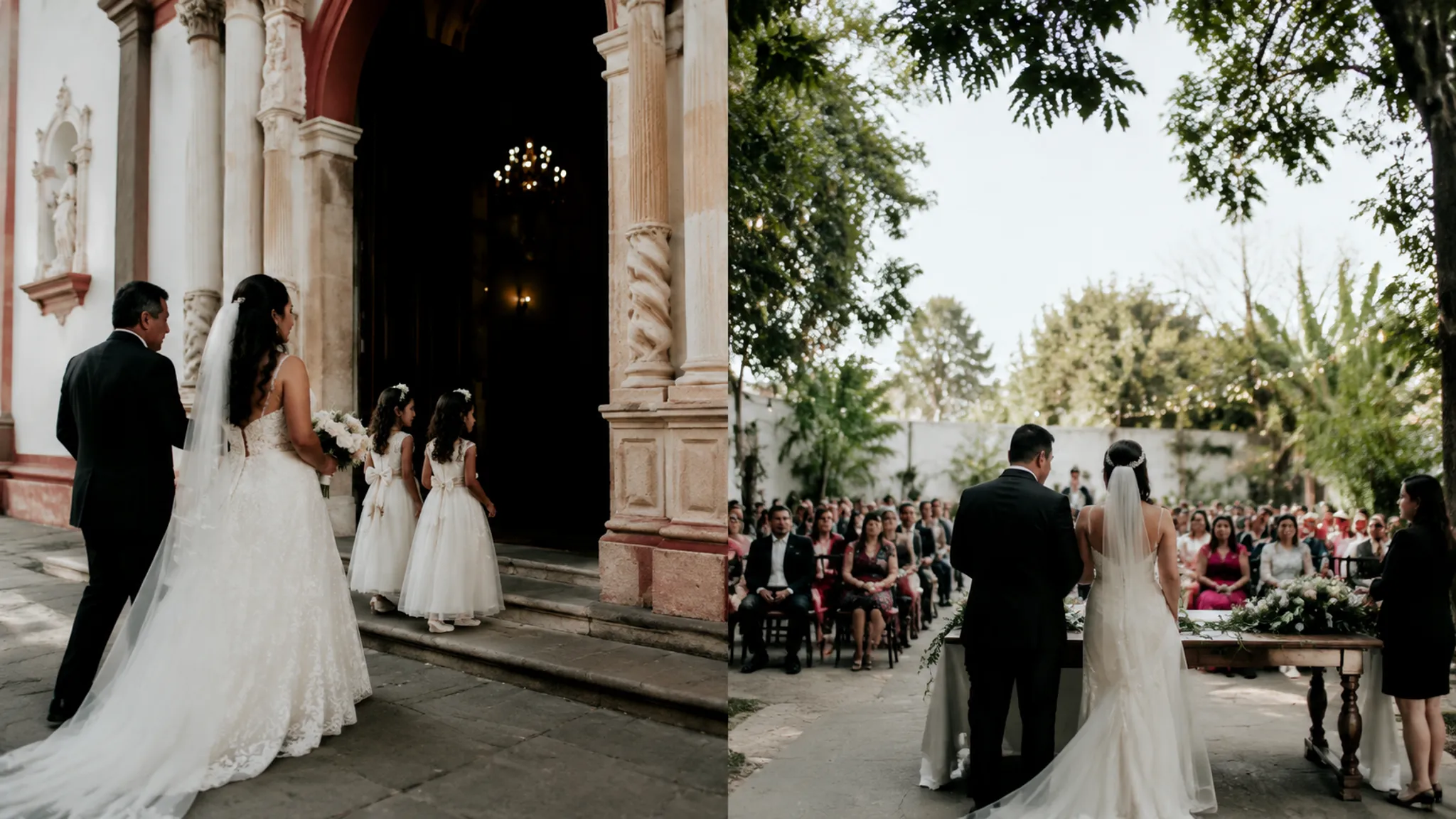
Comparative research from other countries shows that the relationship between civil and religious ceremonies differs across jurisdictions and institutions. It can explain why confirmation matters, but it cannot establish Mexican civil procedure or a particular Catholic parish's policy.
Planning a Civil Wedding Before a Church Wedding
Some couples hold a civil ceremony first and plan the church wedding later because of scheduling, family circumstances, destination travel, or the format they want for the larger celebration. The civil event may be private, while the later church wedding becomes the main family gathering.
The planning question is not whether one order is more authentic. It is how that order changes the work for each institution and each group of people involved.
Questions for the Civil Registry Office
Ask the relevant civil registry office or local authority for current, location-specific information about:
- Appointment availability and ceremony timing.
- Identification, certificates, translations, or other documents it may request.
- Whether documents from another country require additional steps.
- Who must attend and whether witnesses are requested.
- Where signatures are completed and when records or certificates may become available.
- Whether the ceremony can take place at a location outside the registry office.
- Whether any timing conditions affect the later church ceremony.
Do not rely on a document list from another state, country, family member, or wedding website. For Mexican-American or cross-border couples, direct questions to the civil registry office, consulate, or local authority connected to the marriage. A parish can explain its own process, but it does not replace civil registry guidance.
Questions for the Parish
Describe the proposed sequence plainly when contacting the parish:
“We are considering a civil ceremony on one date and a church wedding on another date. Which parts of your preparation process apply to us?”
Ask about:
- Preparation meetings or classes.
- Documents the parish asks the couple to provide.
- Whether a prior civil ceremony changes the parish process.
- Whether the church ceremony can take place on the proposed date and at the chosen venue.
- Which priest or parish representative will lead the ceremony.
- How padrinos and madrinas may participate.
- Whether las arras or el lazo are included, optional, or handled in a particular way.
- Which readings, music, languages, and ritual elements are permitted.
- Whether photography, video, flowers, or family processions have limits.
- Whether a diocese or another church authority must be consulted.
Treat the parish conversation as a planning checkpoint. Get its answer before printing the program or booking details that depend on the ceremony format.
Build One Shared Timeline
Once the sequence is chosen, map every handoff rather than recording ceremony start times alone:
- Couple and family arrival.
- Civil registry appointment or ceremony.
- Travel to the church, if needed.
- Church preparation and guest seating.
- Church ceremony.
- Family photographs and formal portraits.
- Travel to the reception.
- Couple's entrance.
- Meal, music, speeches, dances, and family moments.
- Departure arrangements.
Add one responsible person to each transition. A family member or sponsor may carry las arras, while flowers and other items may need separate arrangements at each location. The photographer's plan should identify which ceremony includes the important family and ritual moments.
For a same-day plan, agree on a delay decision before the wedding day. Decide what happens if the civil appointment runs late, traffic increases travel time, or the church schedule changes. The person managing the day should know whom to contact at the parish, registry office, venue, and family group.
Assign Family Roles Across Both Ceremonies
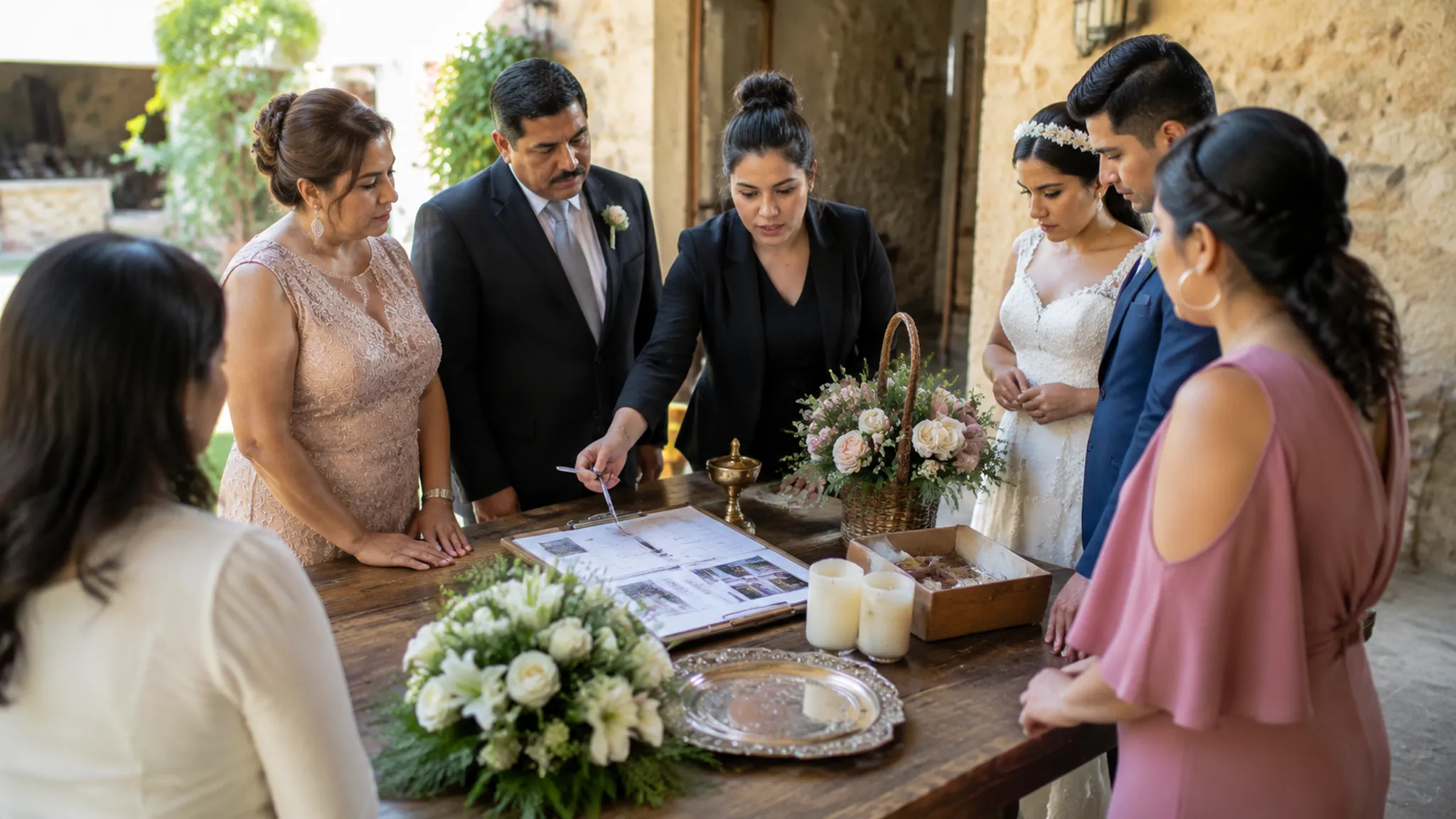
Two ceremonies can create uncertainty for padrinos, madrinas, parents, siblings, and other relatives. A person may have a role in the church ceremony but not attend the civil appointment. Someone else may be expected to attend both even when the civil event is small.
In many Mexican Catholic weddings, padrinos and madrinas are associated with particular ceremonial objects or responsibilities. Families and parishes may use these titles differently, so write down the actual responsibility rather than relying on the title alone.
A simple role sheet can include:
- Person's name and ceremony attendance.
- Ritual or practical responsibility.
- Arrival time and items they will bring or hold.
- Participation in photographs, entrances, or speeches.
- A backup person if they cannot attend.
Las Arras
Las arras are commonly associated with Catholic wedding ceremonies in Mexican and Mexican-American contexts, but families and parishes may handle them differently.
Confirm who provides and carries the coins, whether they will be used during the church ceremony, whether the parish has preferred wording or presentation, and who keeps them afterward. An object used in one family wedding will not automatically be included in every church ceremony.
El Lazo
El lazo is another ritual element often discussed in Mexican Catholic wedding planning. Its participants, placement, and timing can vary.
Ask who will place it, whether the parish permits the chosen form, where participants should stand, whether the photographer may move, and when the item should be delivered. Assign one person to bring the lazo and another to coordinate the participants. That small division prevents a ceremony-day search for the item or the people involved.
Connect the Venue, Reception, and Guests
The reception plan should follow the ceremony sequence. For a same-day civil and church wedding, check travel distance and the time guests may spend waiting. For separate-day events, decide whether the civil ceremony has its own meal, photographs, or family gathering.
Ask each venue about vendor arrival, family waiting areas, storage for ceremony items, photography and music restrictions, guest entry, reception entrance timing, and flexibility if a ceremony runs late. Confirm who introduces speeches, processions, dances, or other family moments relatives expect to see. Do not assume a general cultural script will fit this couple's celebration.
Guests should understand which event they are attending and whether the civil ceremony is private, limited, or open to the wider group. Direct wording can distinguish the events:
- “Civil ceremony: immediate family only.”
- “Church wedding and reception.”
- “Civil ceremony and church wedding on the same day.”
- “Reception follows the church ceremony.”
- “Transportation departs from [location].”
For bilingual invitations, keep event names and times consistent in both languages. Explain to immediate family which relatives have roles, where padrinos and madrinas should arrive, whether ritual items are needed, and which ceremony leads into the main reception.
Photography and Attire Across Two Dates
Separate ceremonies require a decision about visual continuity. The couple may wear the same attire, choose different outfits, or reserve formal attire for the church wedding.
Discuss with the photographer which ceremony includes family portraits, whether photography is permitted at the civil appointment, how las arras and el lazo should be photographed, and which relatives need formal portraits. For same-day events, keep the portrait list short enough to protect the reception timeline. For separate days, schedule portraits for relatives who may attend only one event.
Common Confusions to Resolve Early
“The civil ceremony and church wedding are automatically the same event.”
They may occur close together, but they can involve different people, locations, officiants, wording, and procedures. Confirm the relationship with both the civil registry office and the parish.
“The parish will know what the registry office needs.”
The parish can explain its own preparation and ceremony process. Civil procedure questions belong with the relevant registry office or local authority.
“Padrinos and madrinas have fixed roles.”
Family language may use these terms broadly, while a parish or couple may assign specific responsibilities. Record the role, item, arrival time, and ceremony instead of relying on the title.
“A familiar ceremony order applies everywhere.”
Comparative examples show that civil and religious ceremonies are arranged differently across jurisdictions and institutions. Use them to generate questions, not to predict a Mexican ceremony sequence.
“All guests should attend both ceremonies.”
Some civil ceremonies are small gatherings, while the church wedding and reception are larger events. State the guest plan clearly in invitations and family messages.
Use a Confirmation Sheet
Before finalizing the calendar, keep one document with separate sections for the civil registry office, parish, venue, family, and guests.
- Civil registry office: contact, appointment, participants, witnesses, signatures, documents to ask about, and record questions.
- Parish: preparation steps, ceremony date, ritual elements, family roles, language, music, readings, and photography rules.
- Venue: arrival times, travel, item storage, guest access, reception handoff, vendors, and delay procedures.
- Family: participants, items, positions, ceremony attendance, and photographs.
- Guests: invitation wording, bilingual details, transportation, locations, arrival instructions, and reception timing.
Mark every item as confirmed, pending, or family preference. This keeps institutional procedure, family expectation, and the couple's choices from being treated as the same thing.
Final Planning Path
- Choose same-day or separate-day ceremonies.
- Map people, locations, travel time, and reception handoffs.
- Ask the civil registry office about the process for the relevant location.
- Ask the parish how the proposed civil sequence affects church preparation.
- Assign padrinos, madrinas, family members, witnesses, and item carriers.
- Confirm las arras, el lazo, readings, music, language, and photography boundaries.
- Write bilingual guest information that distinguishes each event.
- Give the venue and reception team one shared timeline.
- Reconfirm pending items before invitations and final schedules are issued.
- Keep confirmation records with the wedding planning documents.
The central decision is not whether civil or church comes first in every Mexican wedding. It is whether the chosen sequence has been discussed with the relevant institutions, explained to the people involved, and translated into a realistic plan for the day.
Sources
These comparative sources help explain why relationships between civil and religious ceremonies vary. They do not establish Mexican civil procedure, Catholic parish policy, or a universal ceremony sequence. Confirm those details with the relevant registry office, parish, diocese, consulate, venue, or local authority.