
Bilingual Wedding Menu Wording for Mexican Dishes and Drinks
When guests may not recognize every dish, the clearest bilingual wedding menu wording keeps the Spanish name and adds a short English description. The Spanish name preserves the couple's chosen menu language; the English line explains what guests can expect.
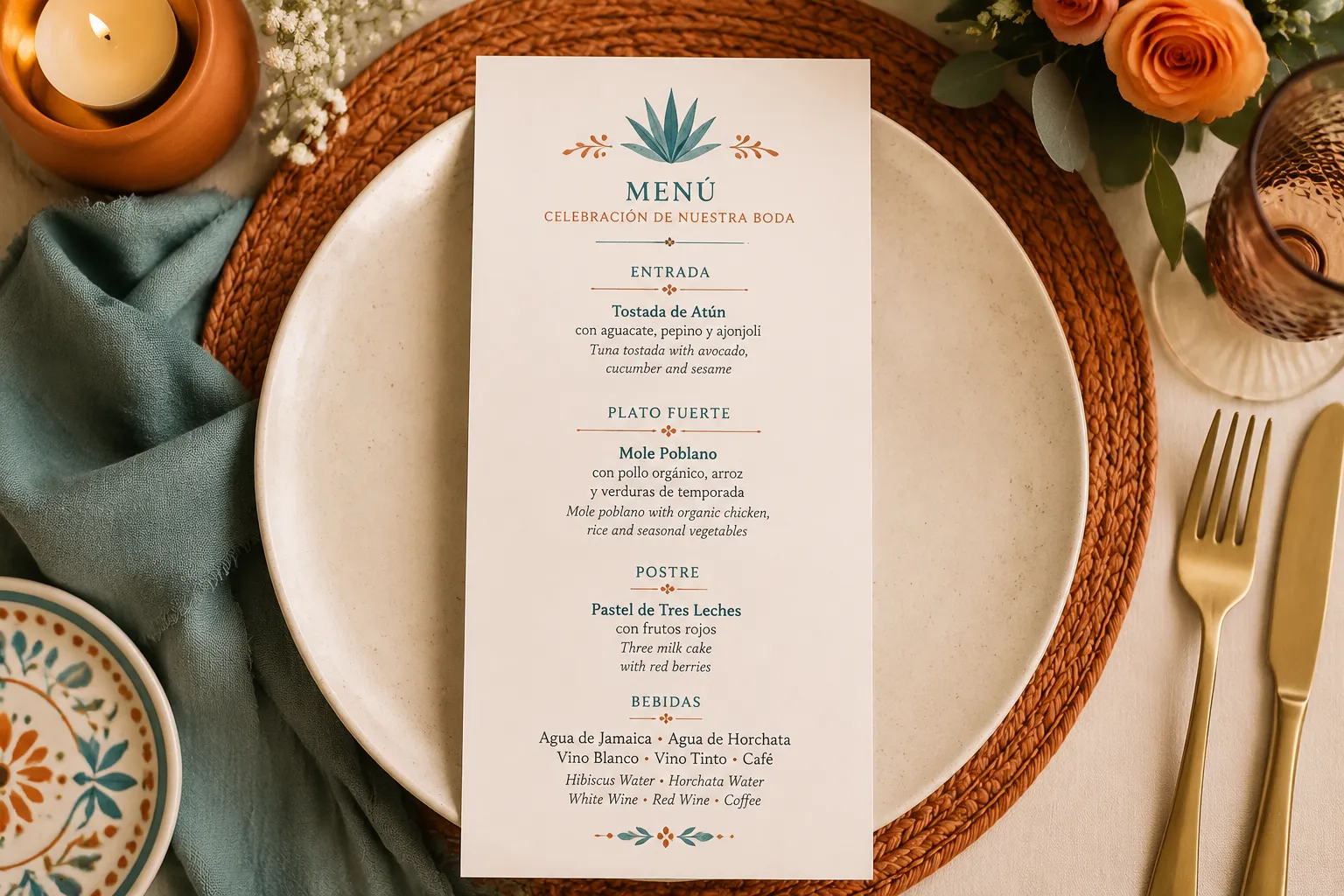
Use these as wording models, not universal translations. Confirm the dish name, recipe, ingredients, preparation, and regional terminology with the caterer before printing.
A Simple Bilingual Menu Format
A two-line format works well for printed dinner menus, place settings, and buffet cards:
Mole Poblano
Chicken with a chile-and-spice sauce
A single-line format can suit smaller labels or limited table space:
Enchiladas Verdes | Chicken-filled tortillas with green sauce
Choose one format and use it consistently. Avoid giving one item a full sentence while presenting another as a loose ingredient list. Consistent capitalization, punctuation, and description length help the caterer, venue team, and guests read the menu quickly.
English-Spanish Menu Options for Mexican Dishes
The following bilingual dish labels are starting points. The actual filling, sauce, cooking method, and accompaniments should control the final English wording.
Starters and Small Plates
- Ceviche
Citrus-marinated seafood with vegetables and herbs - Esquites
Seasoned corn served with the listed toppings - Elote
Grilled corn with a creamy topping and chile - Quesadillas
Griddled tortillas filled with melted cheese - Tamales
Steamed masa parcels with a savory filling
Adjust the description when the recipe changes. A chicken tamal needs different wording from a pork, cheese, vegetable, or other filling.
Main Dishes
- Mole Poblano
Chicken served with a chile-and-spice sauce - Enchiladas Verdes
Filled tortillas with green sauce - Enchiladas Rojas
Filled tortillas with red chile sauce - Tacos de Carnitas
Tacos filled with seasoned slow-cooked pork - Pollo en Salsa
Chicken served in the caterer's specified sauce - Carne Asada
Grilled beef served with the listed accompaniments - Chiles Rellenos
Stuffed peppers served with sauce - Arroz Mexicano
Seasoned rice prepared in the selected recipe
A short explanation is generally more useful than a literal word-for-word translation when the Spanish name does not tell every guest what to expect. At the same time, avoid replacing a specific dish with a broad label such as “Mexican entree” when the preparation matters.
Bilingual Drink Labels
Drink labels should identify the Spanish name while clarifying the base, flavor, temperature, and service style. A familiar name does not always show whether a beverage contains alcohol or is served warm, chilled, sparkling, spicy, or over ice.
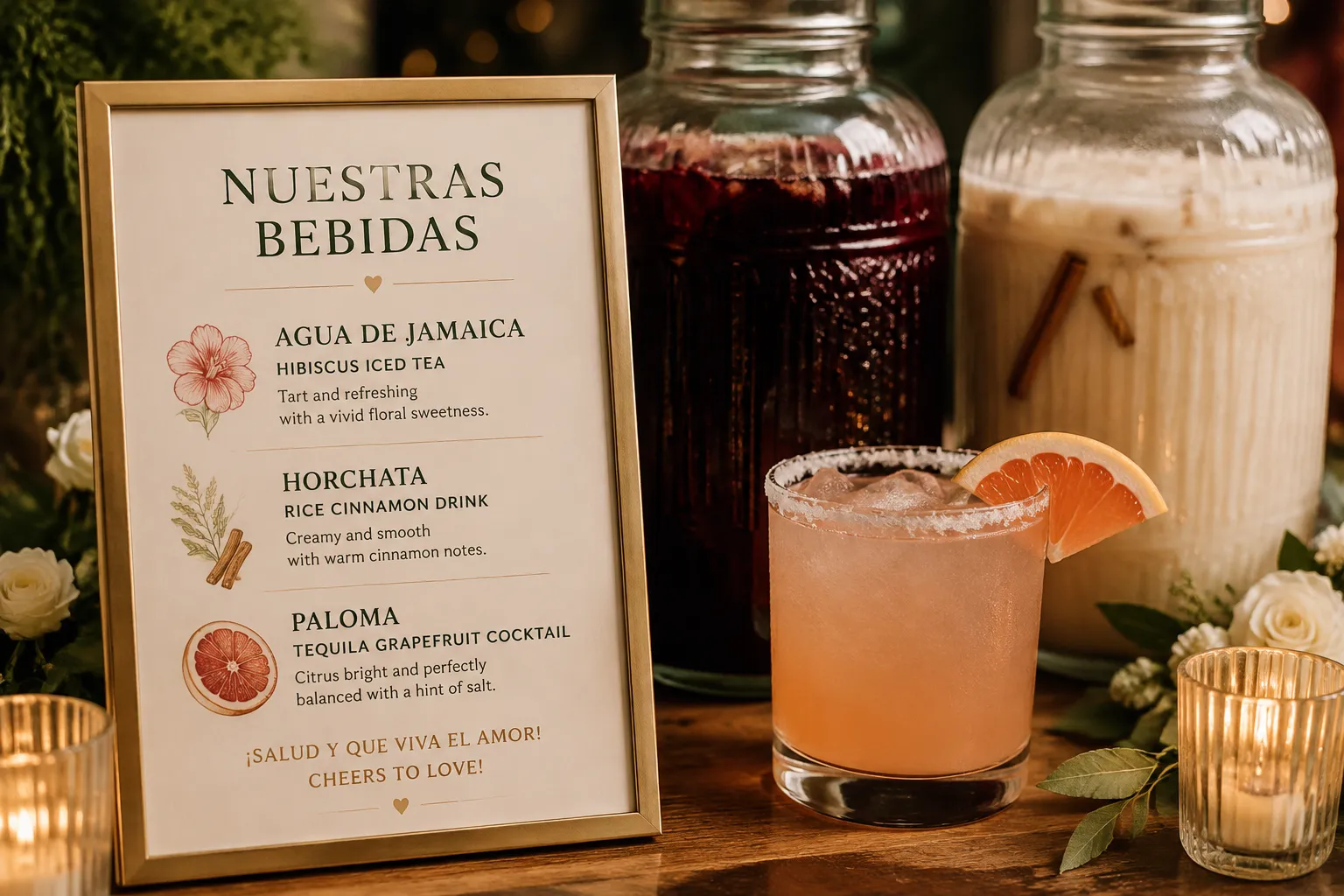
- Agua de Jamaica
Chilled hibiscus beverage - Horchata
Sweet rice-based beverage with cinnamon - Agua de Tamarindo
Chilled tamarind beverage - Agua de Sandía
Chilled watermelon beverage - Atole
Warm, thick masa-based beverage - Paloma
Tequila and grapefruit cocktail - Margarita de Limón
Lime margarita - Michelada
Beer cocktail with citrus and savory seasonings
Confirm the actual ingredients, alcohol content, garnish, and serving format with the beverage provider. If drinks are displayed together, use clear headings such as “Nonalcoholic Beverages” and “Cocktails” so guests do not have to infer the difference from color or name.
When to Keep the Spanish Name
Keep the Spanish name when it identifies the dish, reflects the couple's chosen menu language, or helps family members recognize what is being served. The English line does not need to imitate the Spanish wording. Its job is to provide useful context for guests who may not know the term.
Tamales de Pollo
Steamed masa parcels filled with chicken
Tacos de Pescado
Fish tacos with the selected toppings
Arroz con Leche
Rice pudding with cinnamon
Research on multilingual and culturally specific menus distinguishes between language that signals cultural identity and language that communicates practical information. For a wedding reception, both purposes can sit together: Spanish can identify the dish, while English can clarify the guest experience.
How Much Ingredient Context to Add
Add ingredient context when it changes a guest's reasonable expectation. Prioritize the main protein, sauce, preparation style, key flavor, and whether the item is a beverage or cocktail.
Enchiladas Verdes
Chicken-filled tortillas with green sauce
This gives guests more useful information than “Traditional Mexican dish.” Likewise, “Chilled tamarind beverage” tells guests more than “Mexican drink.”
A wedding menu is not necessarily a full recipe. Avoid adding details that the kitchen has not supplied or confirmed. Ask the caterer to review:
- The main ingredients
- The cooking or preparation method
- The sauce or filling
- The accompaniments
- Whether the item is vegetarian
- Whether the drink contains alcohol
- The preferred spelling and capitalization of the Spanish name
For ingredient or allergen questions, rely on the caterer's actual recipe and kitchen-handling information rather than making assumptions from a familiar dish name.
When Pronunciation Help Belongs on the Menu
Pronunciation guidance can help when guests will order from a buffet, request a drink, or take part in a food-related reception moment. It is less necessary when the menu simply records a seated dinner.
If you include it, keep the format discreet and consistent:
Jamaica
Pronounced approximately “ha-MY-kah”
Chilled hibiscus beverage
Use pronunciation as a guest-service aid, not as a performance requirement. Family usage and regional pronunciation can vary, so ask a bilingual reviewer familiar with the intended wording before printing. The venue can also advise whether the menu has enough space for this extra line.
Wording for Buffet Cards and Place Settings
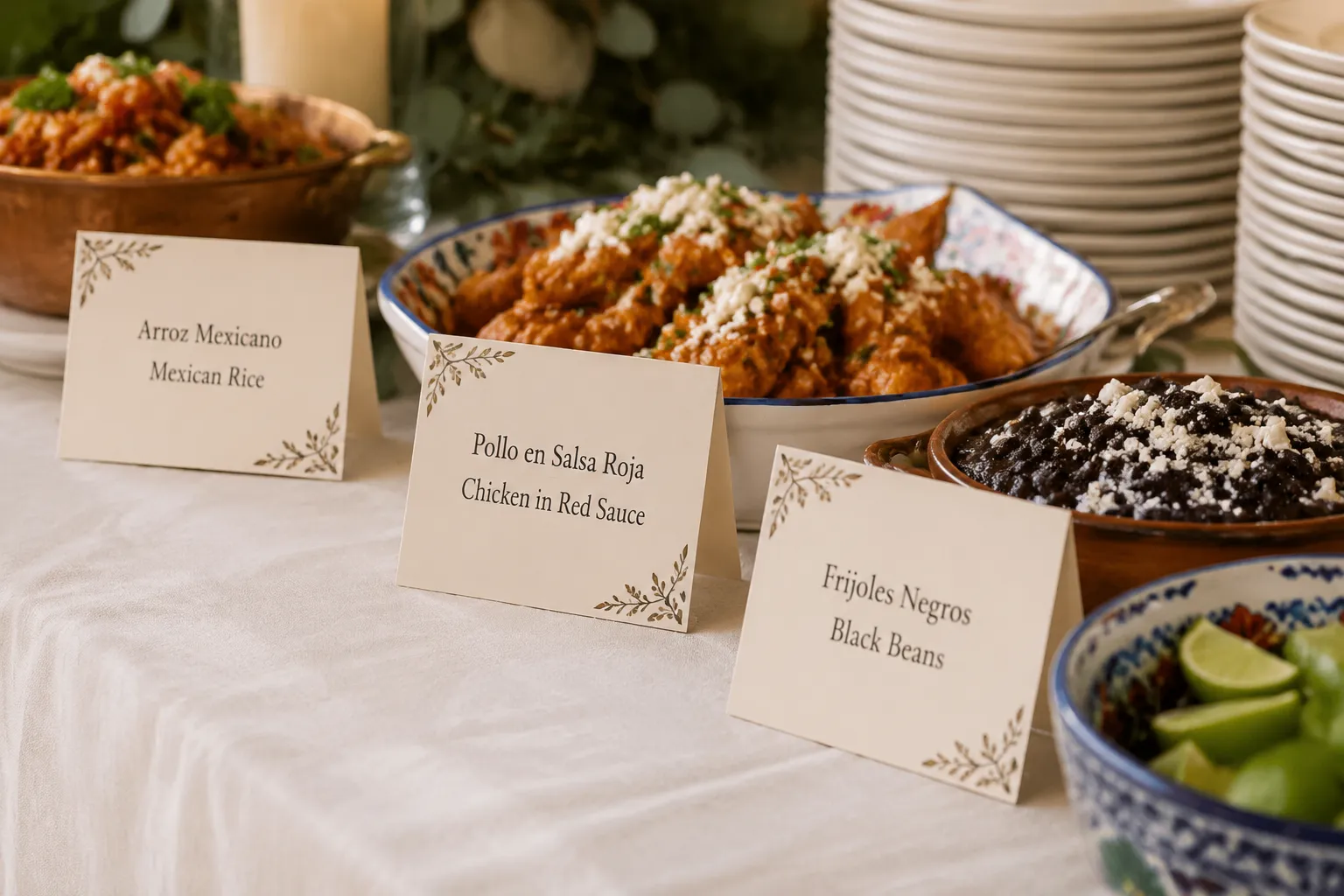
Buffet cards need shorter descriptions because guests often read them while moving through the reception flow.
Mole Poblano
Chicken with chile-spice sauce
Arroz Mexicano
Seasoned rice
Esquites
Seasoned corn
A seated dinner menu can provide slightly more context:
Mole Poblano
Chicken with chile-and-spice sauce, served with rice
Confirm the display format with the venue before sending the final wording to print. Card size, placement, font limits, and service arrangements may affect how much text will remain readable.
Review the Wording Before Printing
Many menu problems come from an unconfirmed ingredient, inconsistent terminology, literal wording, or a description that leaves out an important preparation detail. Send the complete bilingual draft to the people responsible for each part of the decision.
- Caterer: Confirm the recipe, preparation, filling, sauce, and accompaniments.
- Venue: Confirm the card format, placement, service flow, and space available.
- Bilingual reviewer: Check the family's preferred Spanish wording and pronunciation context.
- Couple or designated family member: Make the final menu-language choice.
Ask specific questions:
- Does this Spanish name match the dish being served?
- Does the English description create the right expectation?
- Is there a regional or family-preferred term?
- Should the menu mention the filling, sauce, or cooking method?
- Does the wording distinguish alcoholic and nonalcoholic drinks?
- Will the buffet card, place setting, and dinner menu use the same label?
The caterer's description should control when it differs from a general example. A familiar dish name may refer to different ingredients or preparations across families, regions, and catering formats.
A Practical Final Template
For most bilingual Mexican wedding menus, use this structure:
Spanish Name
English description of the main ingredients, preparation, flavor, or service style
For example:
- Tacos de Carnitas
Slow-cooked pork tacos with selected toppings - Chiles Rellenos
Stuffed peppers served with sauce - Agua de Jamaica
Chilled hibiscus beverage - Paloma
Tequila and grapefruit cocktail - Arroz con Leche
Rice pudding with cinnamon
Before publication, replace general wording with details confirmed by the caterer and beverage provider. The strongest bilingual menu preserves the chosen Spanish names while giving guests readable, accurate information about what will arrive at the table.
Sources
- Insights from language strategy in menu design of ethnic cuisines: An atmospheric-functional information model
- Consumer Response to Authentic-Language Versus English-Language Menu Labeling in Ethnic Dining
- IMPORTANCE OF THE TRANSLATION QUALITY OF MULTILINGUAL MENUS IN HOSPITALITY INDUSTRY
- A standardized approach to menu translations
- An approach to analysing the quality of menu translations in southern Spain restaurants
- On the translation of culinary terms in Malaga province restaurant menus into English. A corpus-based study
- A corpus-based multimodal approach to the translation of restaurant menus